













































































































































































































































































































































































































































































































































































































































































































































































































































































































































































































































































































































































































































































































































































































































































































































































































































































































































































































































































































































































How Top Link Length Changes the Attack Angle of a Grader Blade

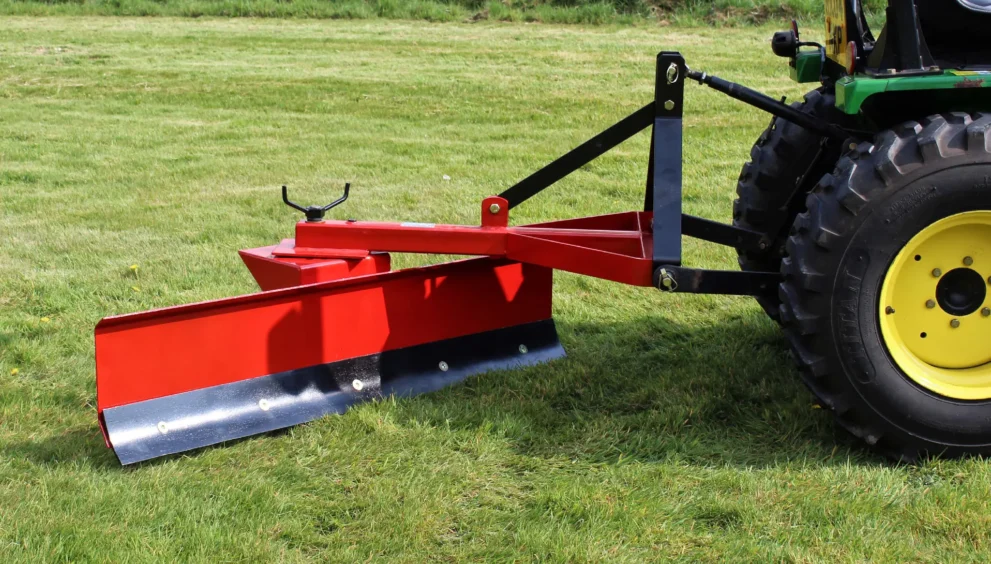
Three point implements are usually adjusted by lifting and lowering, which is the one control that does the least for the finish. The cut is set by the angle the blade meets the ground, and that angle is decided by the top link long before the operator touches the lift lever. A tractor land leveler behaves completely differently at two top link settings that look almost the same from the seat.
The geometry behind the cut
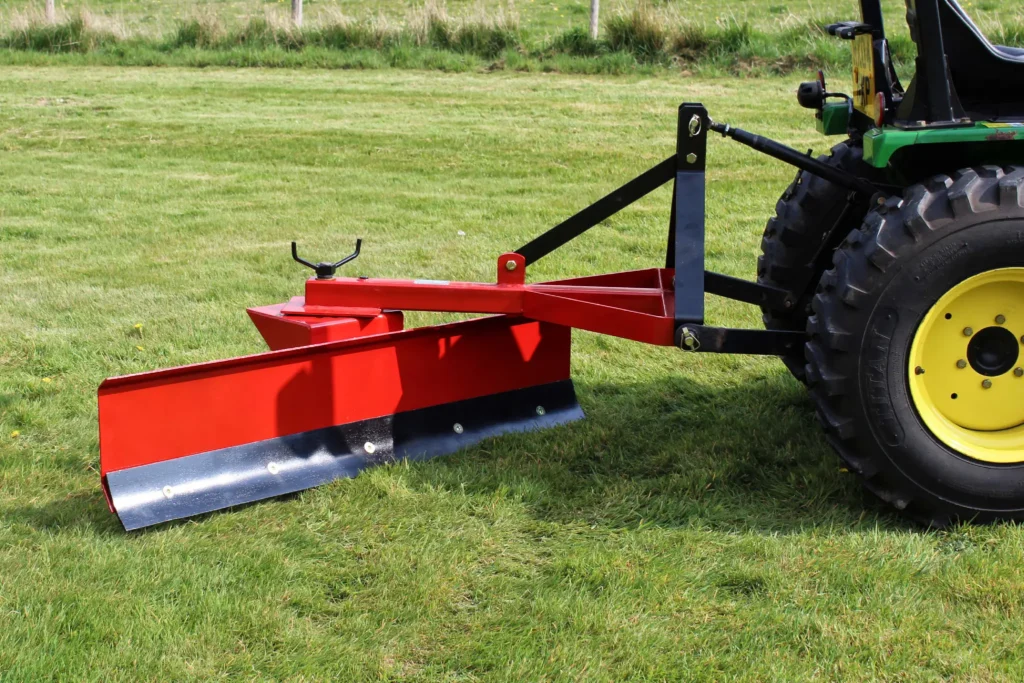
The geometry behind a grader blade on a three point hitch is a triangle. The two lower arms set the height and the top link sets the rotation of the implement around them, so shortening the top link tips the front of the frame upward and lengthening it tips the front down.
On a leveler that rotation is what moves the leading blade in and out of the ground. A short top link lifts the front blade and puts the work on the rear one; a long top link does the opposite, and the same implement goes from cutting to carrying.
Cutting, carrying and when to use each
A front grader blade set to cut breaks up high spots and feeds material backward. A rear blade set low carries and spreads that material, which is what fills the hollows. The usual setup is one cutting and one trailing slightly higher, and reversing which one does which, between passes, is how a surface gets flat rather than merely smooth.
The tractor travels the ruts the blade just made
This is the limitation nobody designs around. A tractor pulling a short implement is driving on ground the blade worked on the previous pass, so wheel ruts feed straight back into the next cut. A longer frame helps because the blade sits further behind the rear axle and averages over a greater distance. It is the same reason a road grader has a long wheelbase, and it is why an eight foot implement behind a compact tractor grades flatter than a four foot one.
What a box blade does differently
A box blade has end plates that hold material inside the box, which suits moving and spreading a quantity of fill. It is a bulk tool. A leveler without end plates lets material escape sideways and is therefore a finishing tool. Choosing between them is a question of whether the job is moving material or flattening what is already there.
Setting it up without guessing
Three checks cover most of it:
- Set the top link with the implement on level ground
- Match lower link height to the cut, not the travel
- Make the finishing pass in the opposite direction
The third is the one that gets skipped when time is short, and it is what removes the directional ridge that every single direction pass leaves behind. Two passes in the same direction build that ridge; one pass back along it takes the ridge off again.
What to check before it goes on the tractor
On a grader blade implement, working width, weight and hitch category decide whether it fits the tractor. Blade thickness, whether the blades are reversible and how the frame is braced describe whether it still cuts straight after a season of gravel.
TMG Industrial builds this one as an eight foot leveler and grader for three point hitches. Setting the top link deliberately, rather than leaving it where the last implement left it, is what separates a graded surface from a dragged one.