


































































































































































































































































































































































































































































































































































































































































































































































































































































































































































































































































































































































































































































































































































































































































































































































































































































































































































































































































































































































































A First Skincare Routine for Teenagers

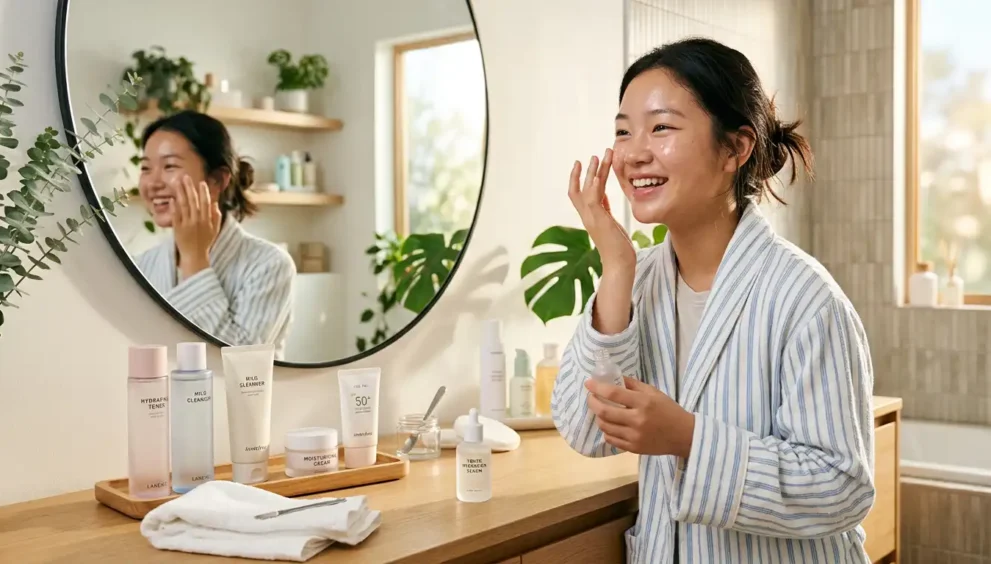
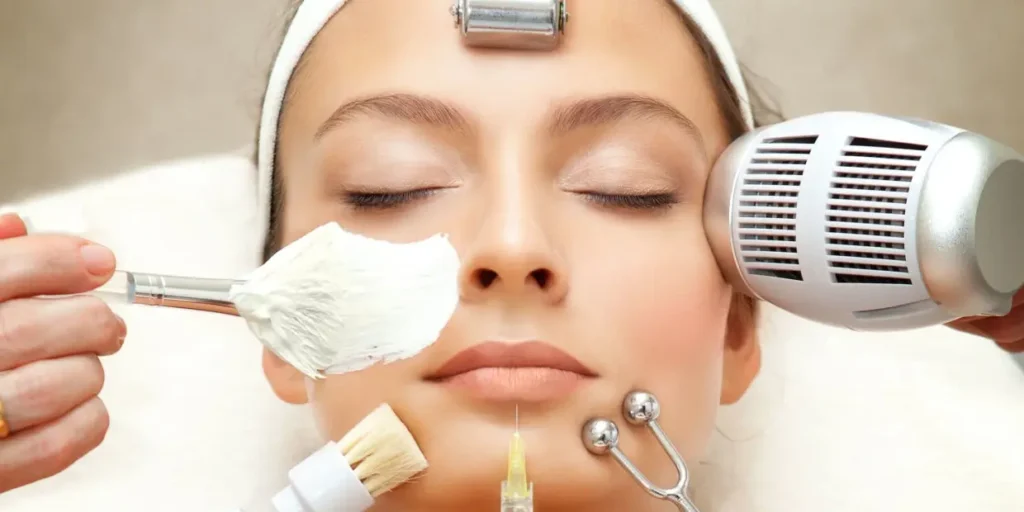
Most teenagers need three products to look after their skin properly, and everything else is optional. Puberty raises oil production, which is why spots, shine and blocked pores tend to arrive around the same time that skincare starts being discussed at school and online. A first routine works best when it’s short enough to repeat twice a day without much thought, and gentle enough that it doesn’t leave skin tight, sore or peeling by the end of the week.
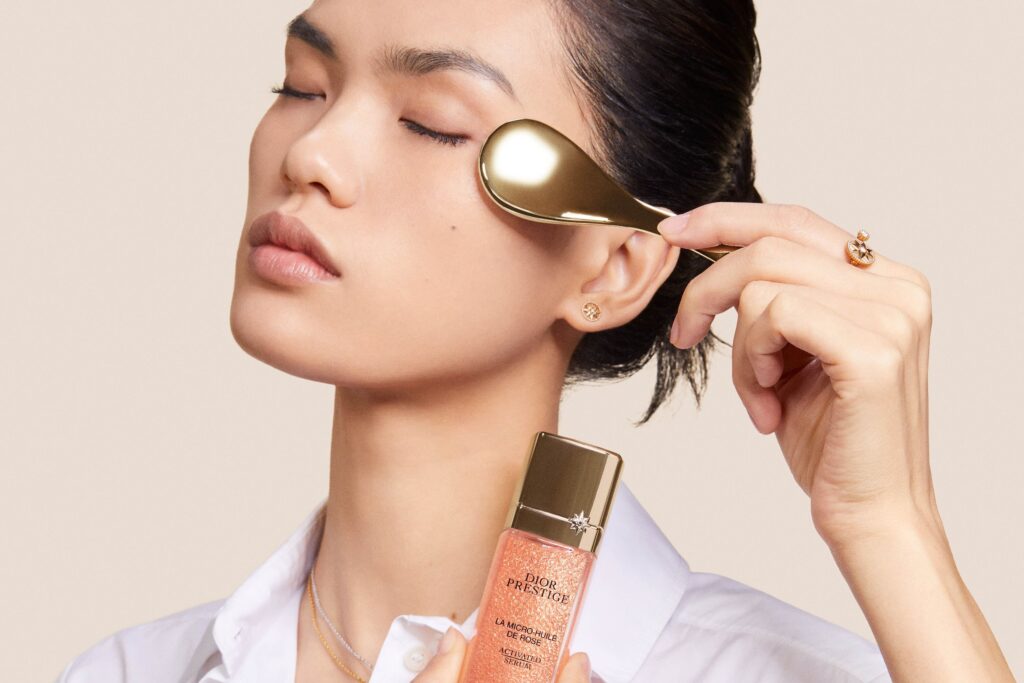
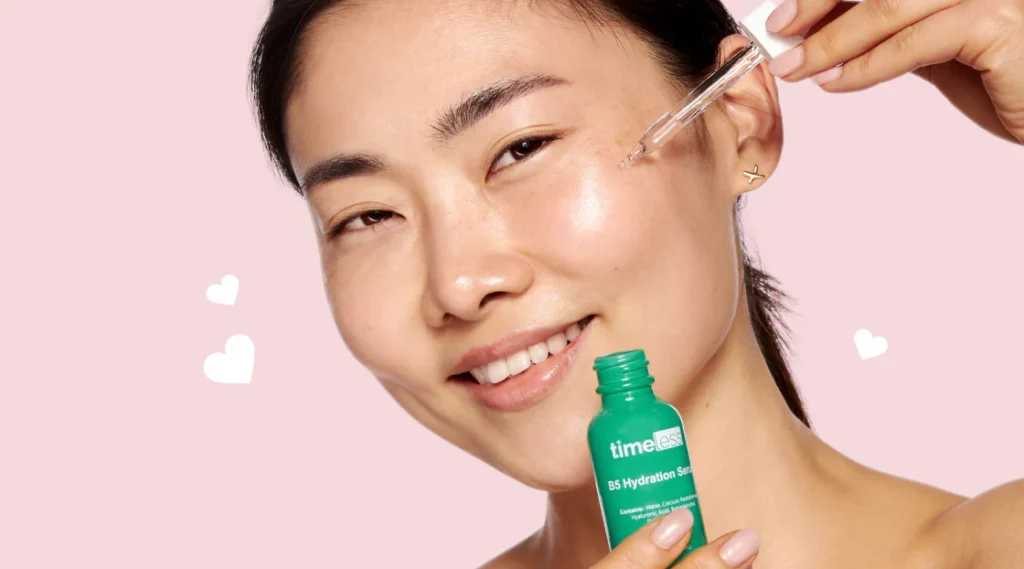
Getting there is complicated by how much of the advice teenagers see is aimed at adults with entirely different concerns. Ten-step routines, expensive serums and anything promising to reverse ageing are being marketed to people who haven’t aged yet, and using them can undo what a basic routine is supposed to achieve. The adults nearby usually set the tone for how all of this goes, so that’s the sensible place to start.
Where adults come in
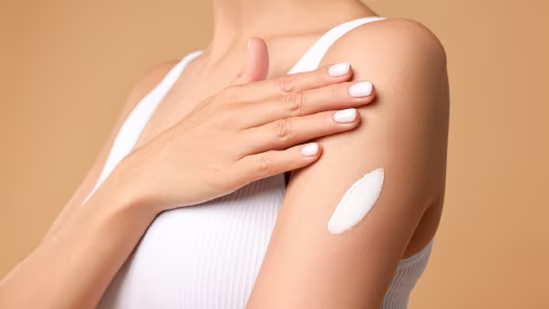
Buying the first products together works better than handing over money and hoping, since it gives you a reason to explain why the fragrance-free cleanser is the right call and the £45 serum isn’t. The everyday care guidance that agencies such as Clifford House Fostering put together for new carers says much the same about any new routine, which is to bring one thing in at a time and leave a week between additions. Patch testing on the inner arm is worth insisting on too, and it settles most arguments about which product is to blame when skin reacts.
Start with three products, not ten
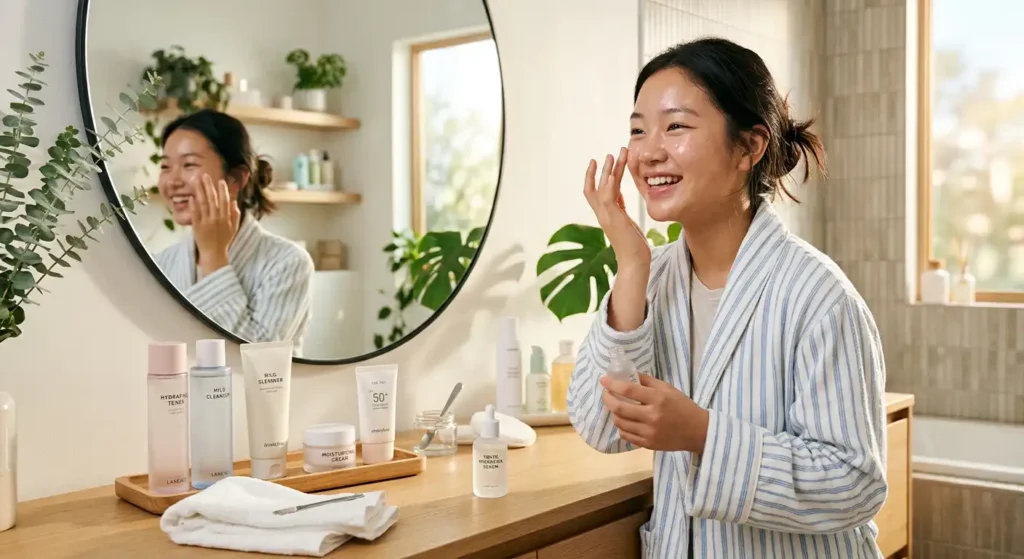
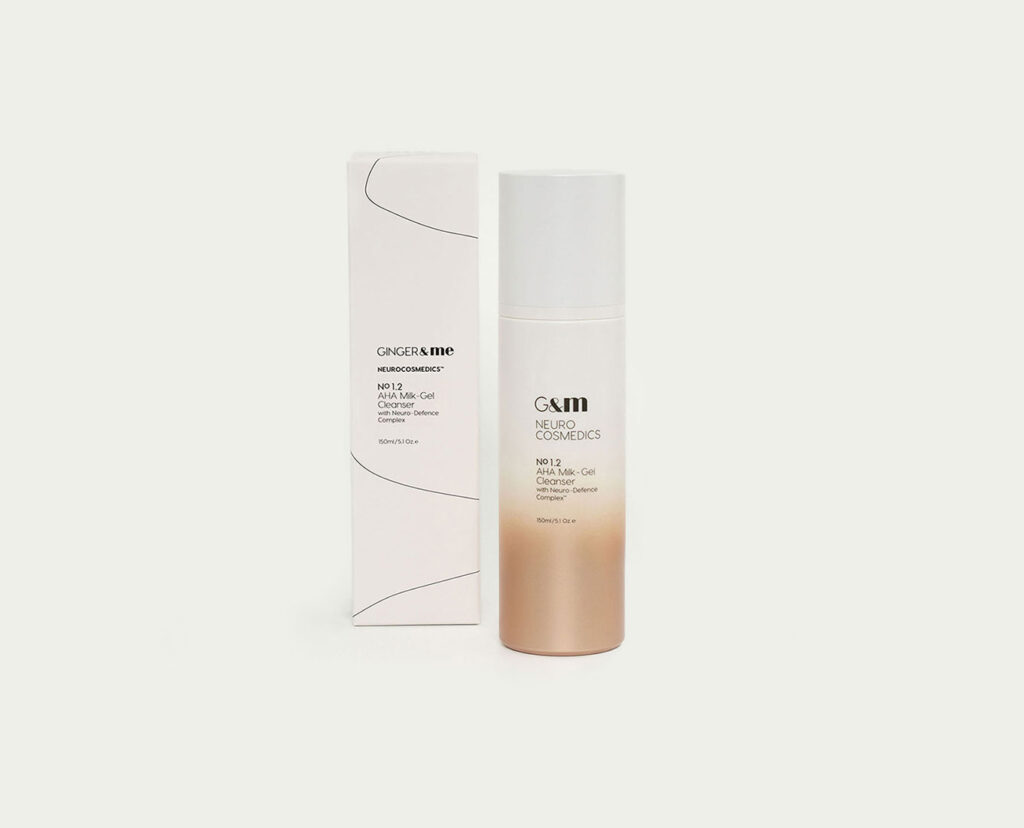
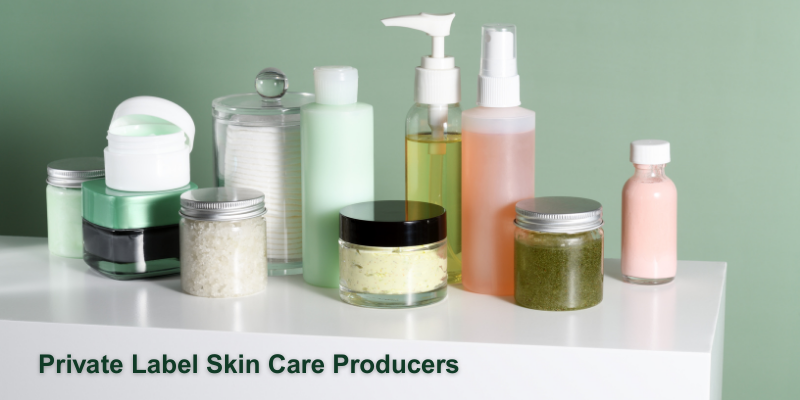
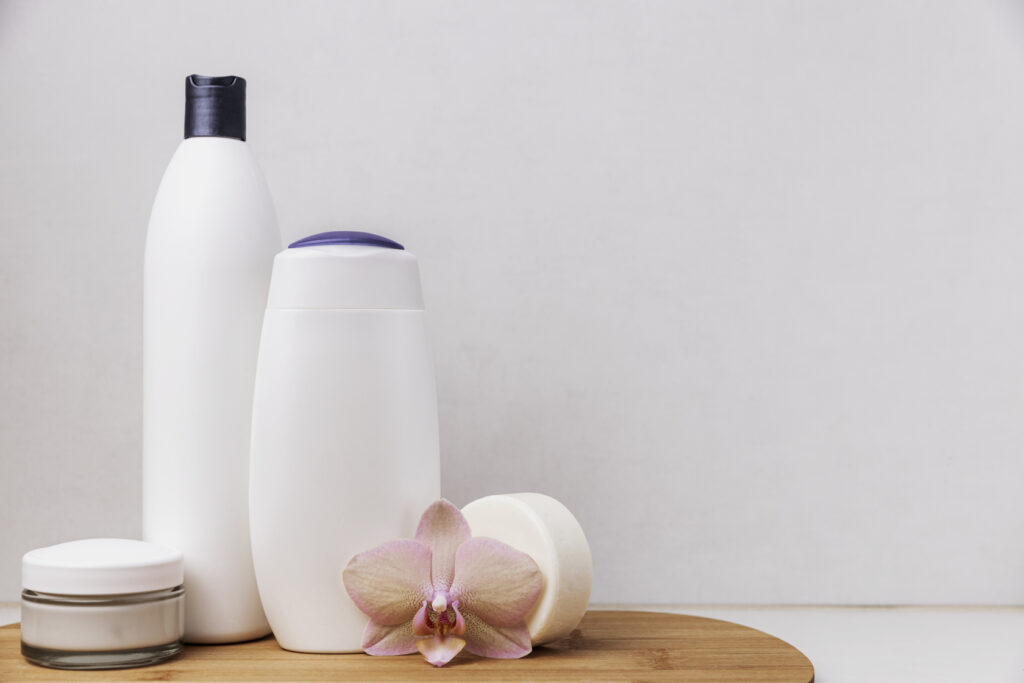
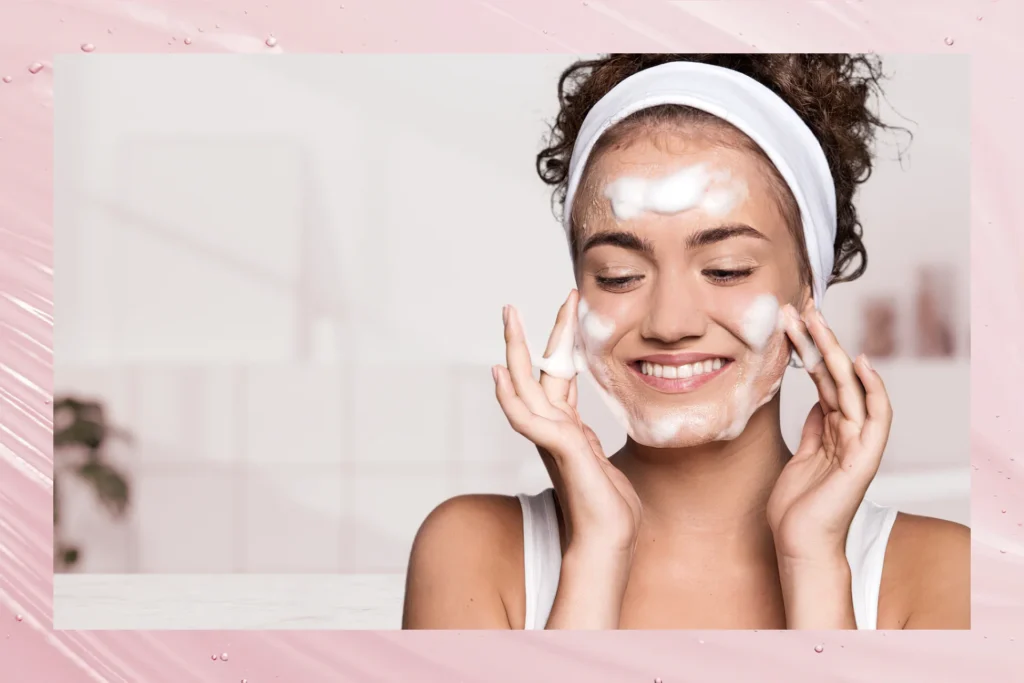
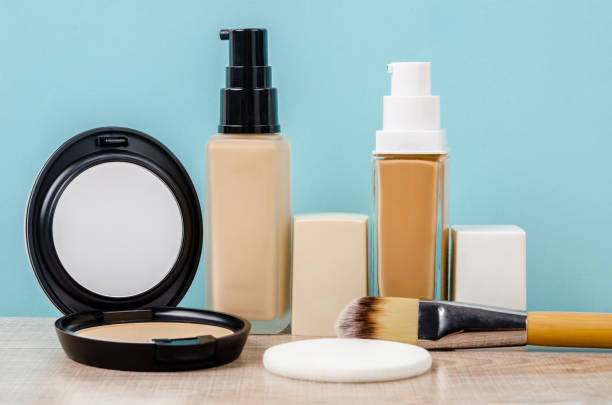
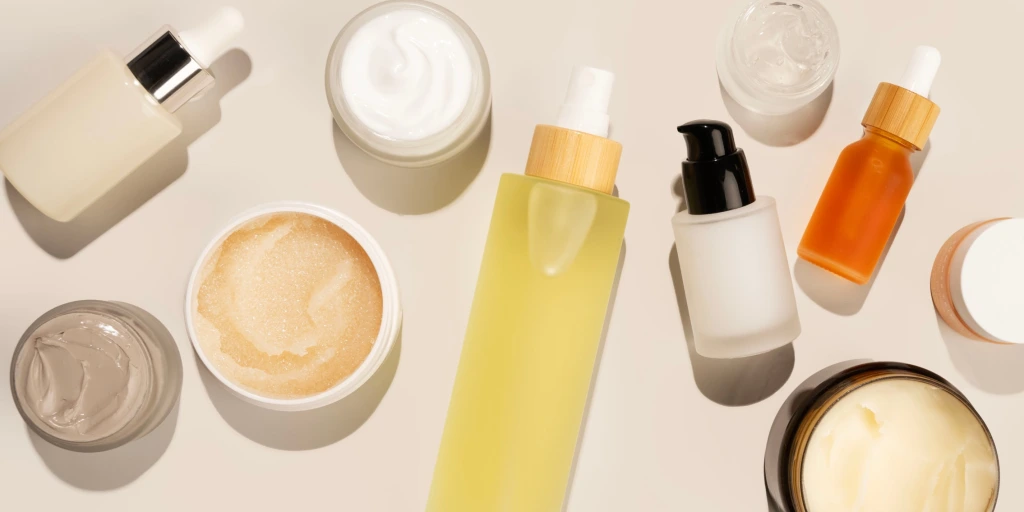
Cleanser: A gentle, fragrance-free face wash used morning and night removes sweat, oil and the day’s grime without stripping the skin. Anything that leaves the face squeaking is doing too much, and heavily foaming formulas often prove too harsh for skin already producing extra oil.
Moisturiser: A light, non-comedogenic moisturiser goes on straight after washing, including on oily skin, since skin that’s been dried out tends to produce more oil to compensate. One tube covering morning and evening is plenty at this stage.
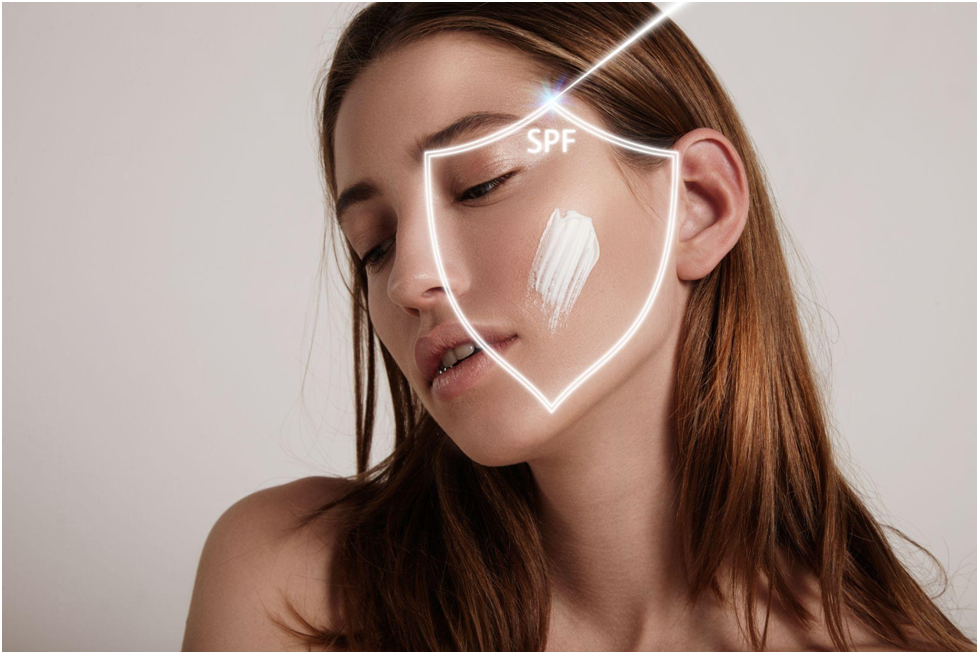
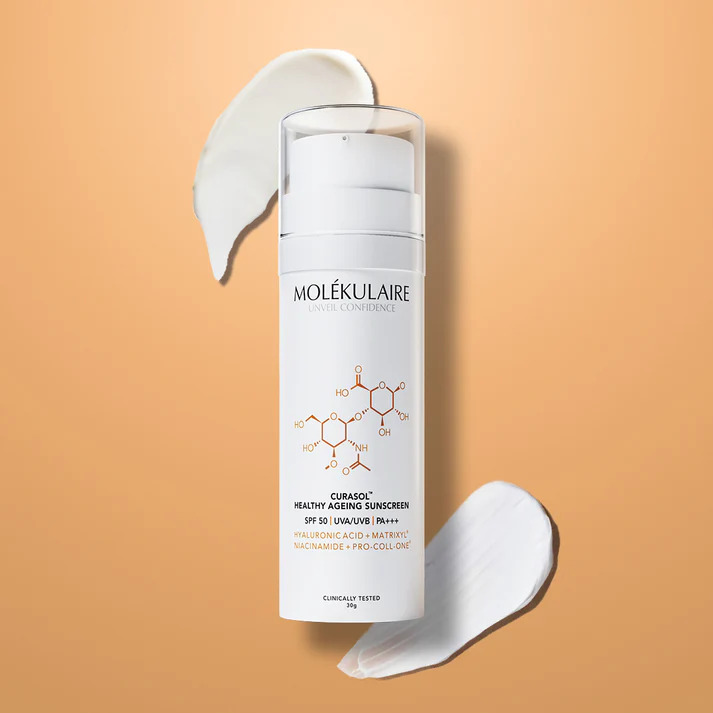
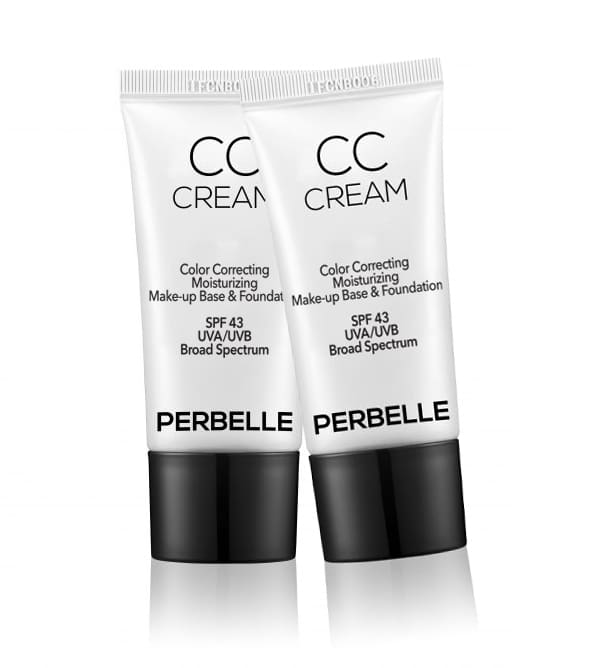
Sunscreen: Wearing SPF 30 every day is the step dermatologists agree on across every age group, and the teenage years are when the habit is easiest to build. A fluid or gel formula sits far better under a school day than a thick beach cream.
What to leave out for now
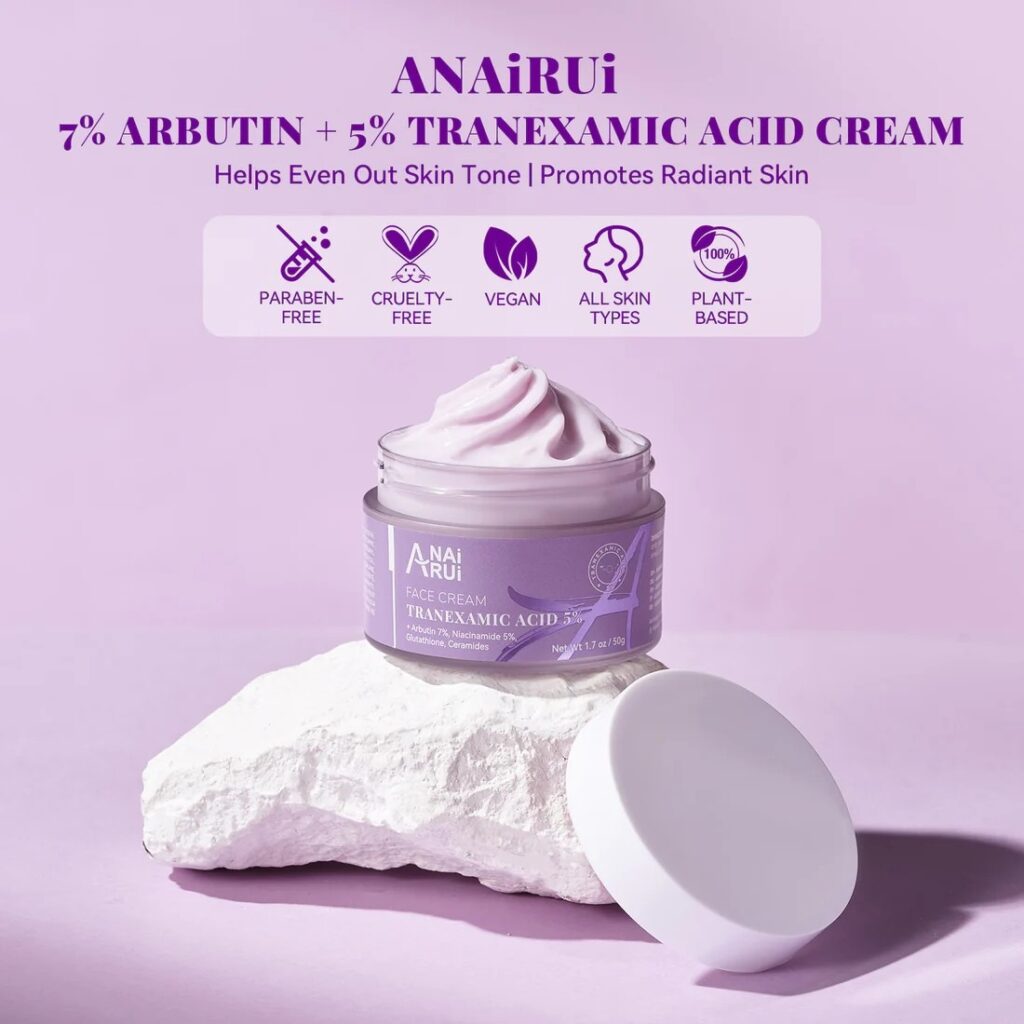
Active ingredients cause most of the trouble. Retinol, exfoliating acids and vitamin C treatments are made for concerns that don’t exist in teenage skin, and layering several at once brings redness, flaking and a damaged skin barrier that takes weeks to recover. UK dermatologists have raised concerns about children as young as ten using anti-ageing products found online. Persistent acne is the exception worth acting on, and that means a GP or pharmacist rather than the beauty counter.
Making it stick
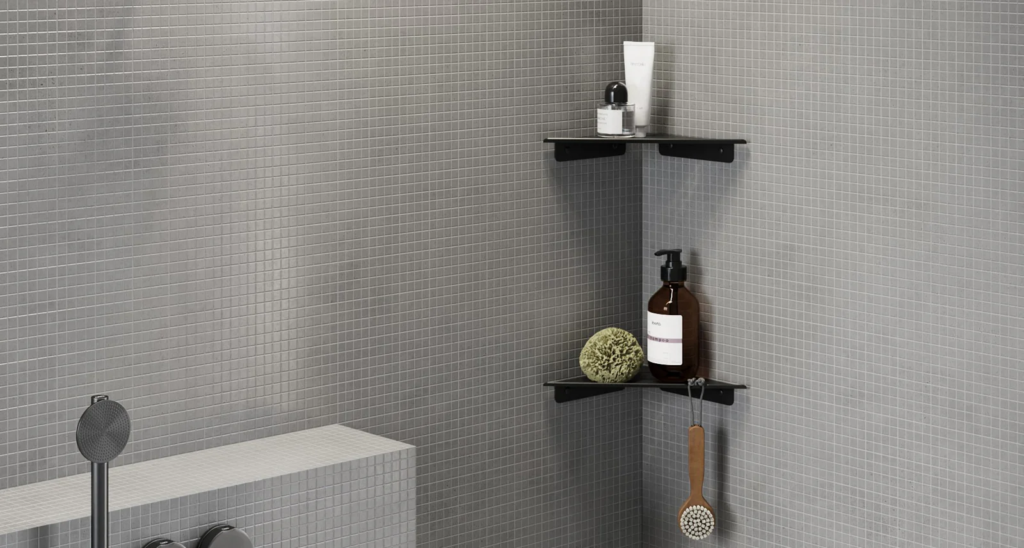
Consistency beats intensity, so a routine that survives tired evenings and exam weeks is worth more than an elaborate one abandoned by half term. Keep everything in one place near the sink, replace products as they run out instead of collecting half-used bottles, and expect several weeks before real change shows. If skin gets worse after something new, stopping that product for a fortnight usually tells you whether it was the cause.