

























































































































































































































































































































































































































































































































































































































































































































































































































































































































































































































































































































































































































































































































































































































































































































































































































































































































































What Actually Makes a Rhinestone Dress Worth Owning


There is a specific disappointment that comes with a rhinestone dress.
You wear it once. It looks incredible. Then it goes back in the wardrobe, and the next time you take it out there are three or four bare patches where stones used to be, and a thread hanging off the hem that catches on everything.
That happens often enough that a lot of people have quietly written the category off. Fun for one night, not worth the money.
Which is a shame, because the difference between a dress that does that and one that lasts years is not really about price. It is about a handful of construction details that are visible if you know to look.
How the Stones Are Attached Is the Whole Story
There are three common methods, and they are not close to equivalent.
Glued. The stones sit on a dot of adhesive. This is the cheapest approach and the one responsible for most of the bare patches. Glue degrades with heat, friction and time, so the stones start coming off across a night of dancing and keep going in storage.
Heat-set. A more stable version of the same idea, using an adhesive backing activated by heat. Better than cold glue, still finite. Fine for a dress you expect to wear a handful of times.
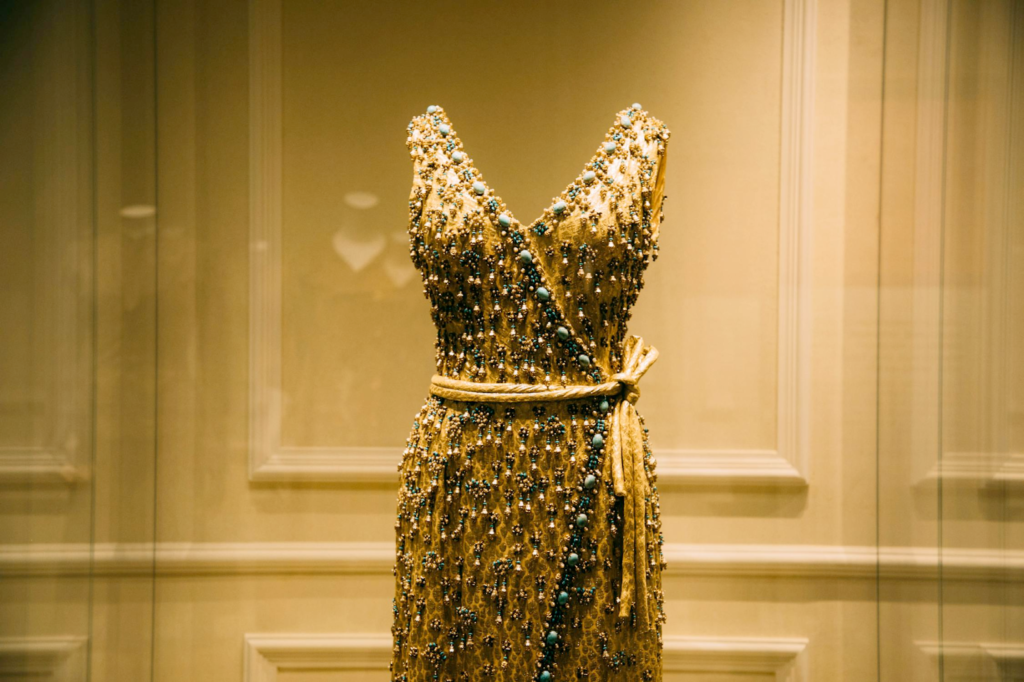
Sewn or prong-set. Each stone is stitched through the fabric or held in a metal claw. Dramatically more durable, dramatically more labour, and the reason well-made embellished dresses cost what they do.
Most dresses use a mix. The useful question is not whether any stones are glued, it is whether the ones in high-contact areas are. Waist, hips, seat, underarms. If the stones there are glued, the dress will not survive a full night of being sat on and moved in.
The Backing Matters More Than the Stones
People look at the stones. The fabric underneath does more work.
Embellishment is heavy. A densely stoned mini can carry a surprising amount of weight for its size, and if the base fabric has no structure it distorts — the neckline sags, the hem pulls unevenly, the whole thing hangs wrong after an hour.
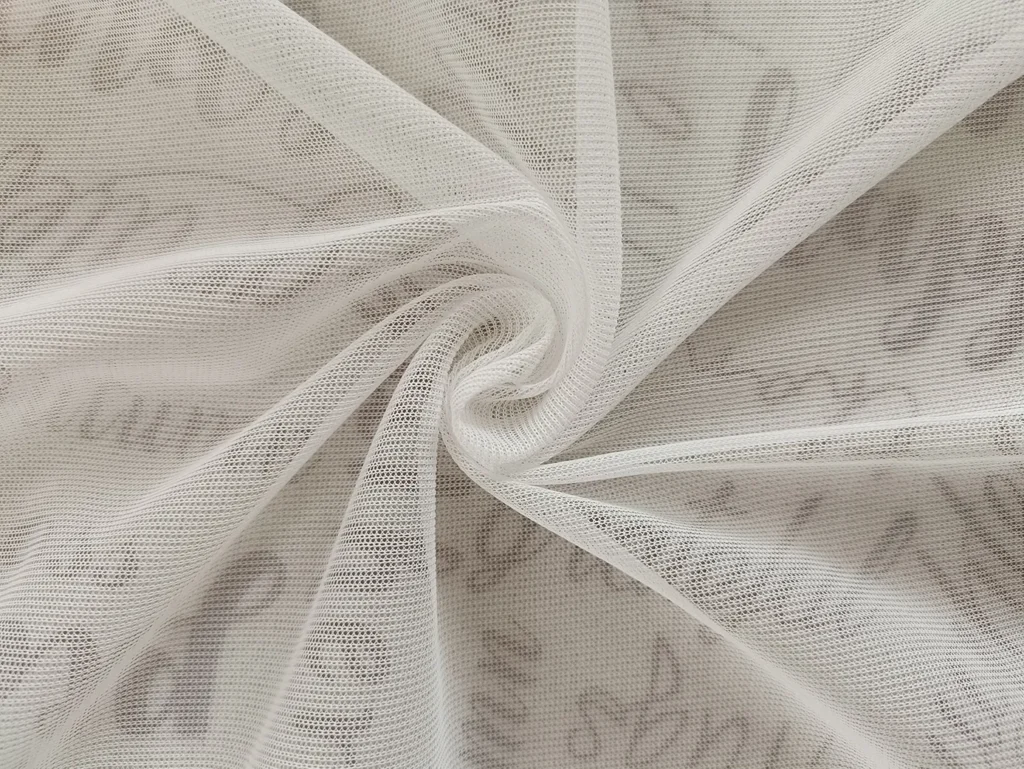
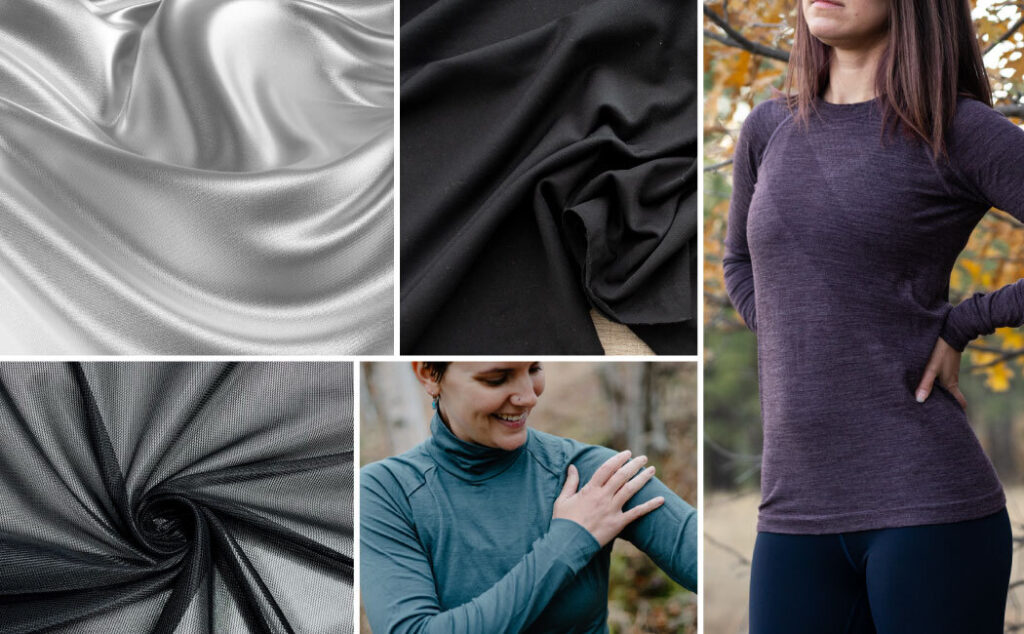
Good embellished dresses are built on something with body. Mesh with a stable weave, scuba, a lined stretch knit, a bonded crepe. Something that holds its shape when weight is applied to it.
There is a quick test. Hold the dress up by the shoulders and let it hang. If the stoned sections pull the fabric visibly out of line while it is just hanging still, they will do considerably worse on a body in motion.
Lining Is Not Optional
An unlined embellished dress is uncomfortable in a way that is difficult to appreciate until you are three hours into wearing one.
The reverse side of a stone setting is not smooth. Sewn stones leave knots. Prong settings leave metal edges. Against skin for an evening, that becomes genuinely irritating, and it is the single most common reason an expensive dress gets worn once.
A full lining solves it. A partial lining through the bodice, which is more common, solves most of it. No lining at all is a decision the manufacturer made to save money, and you will feel it.
Density Is a Style Choice, Not a Quality One
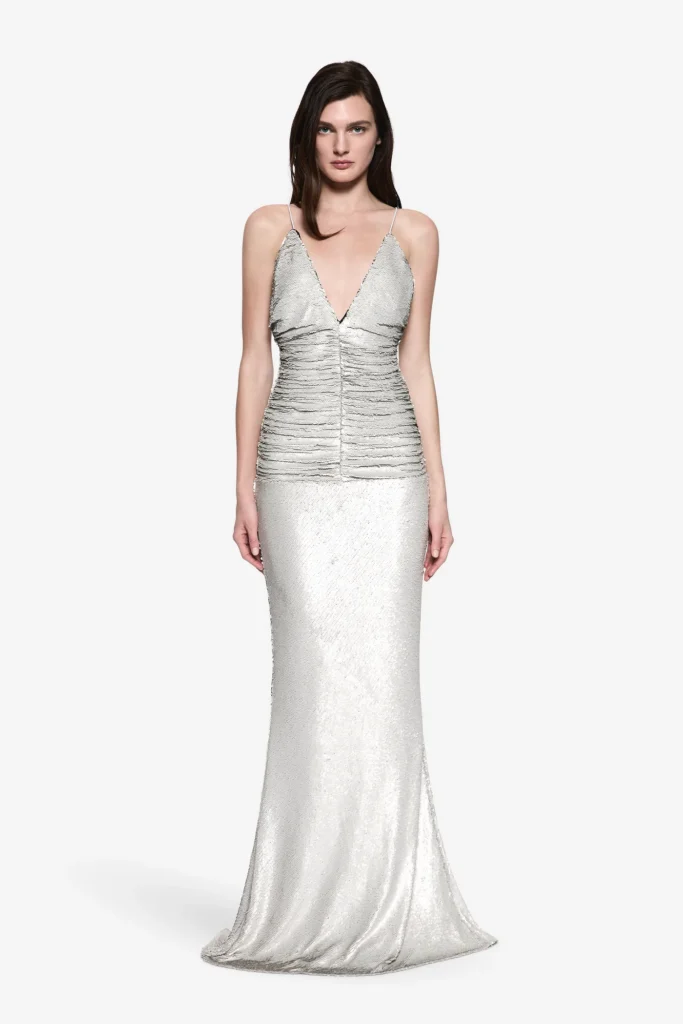
Fully stoned dresses photograph better. That is real, and it is why they dominate the imagery.
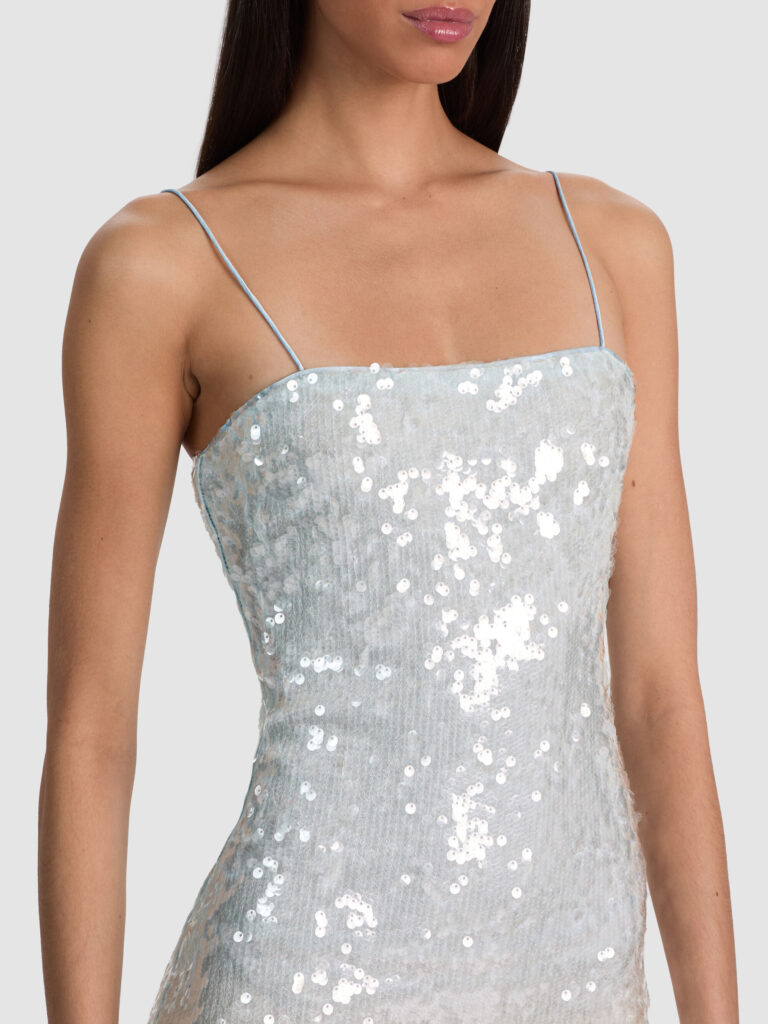
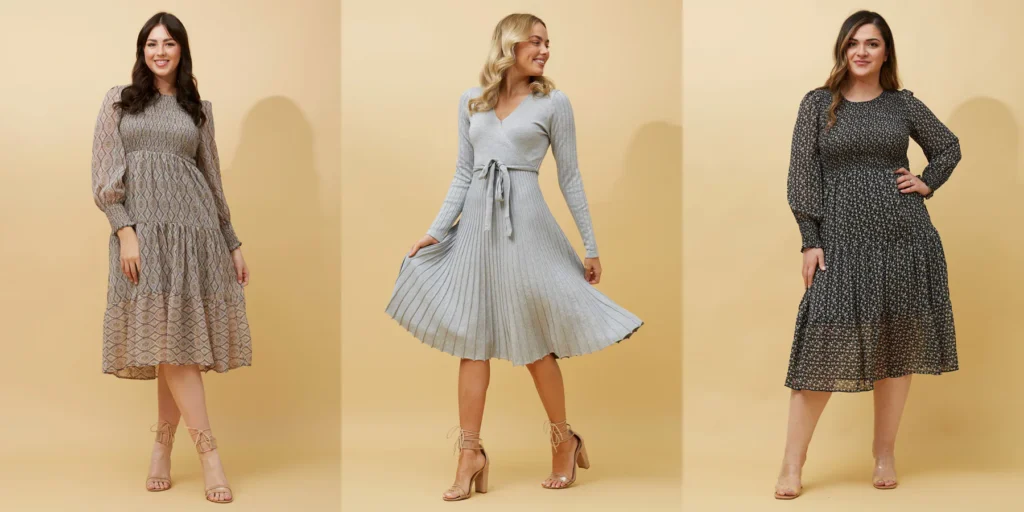
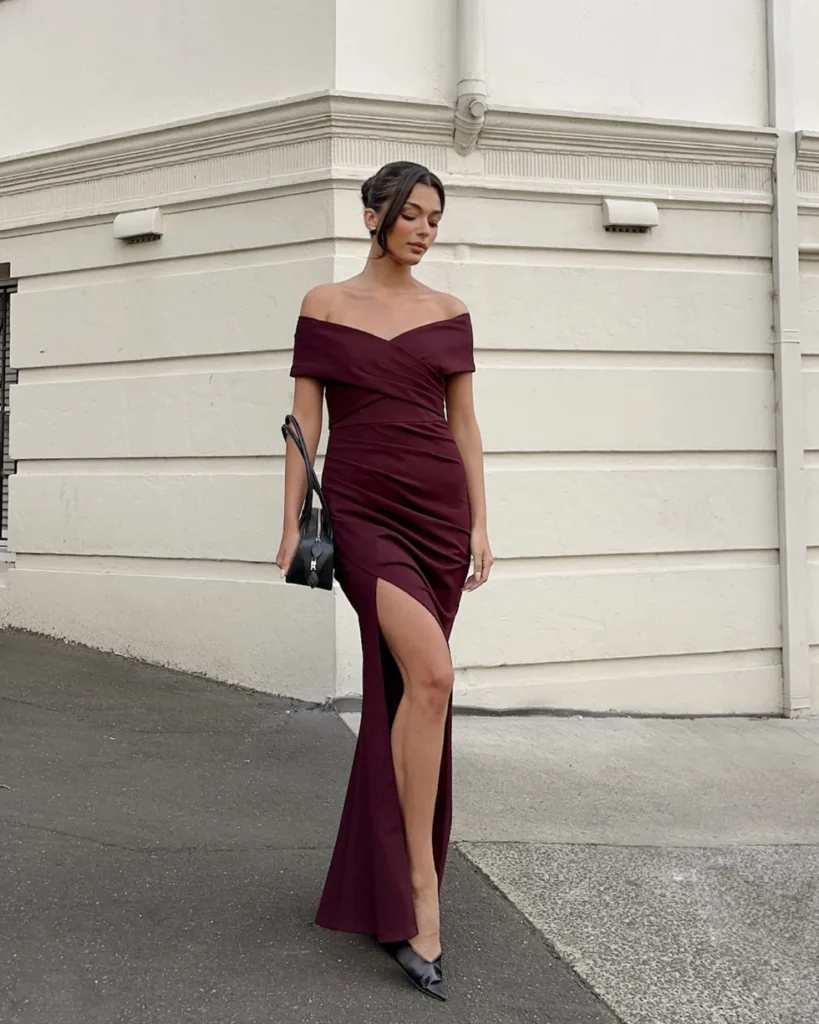
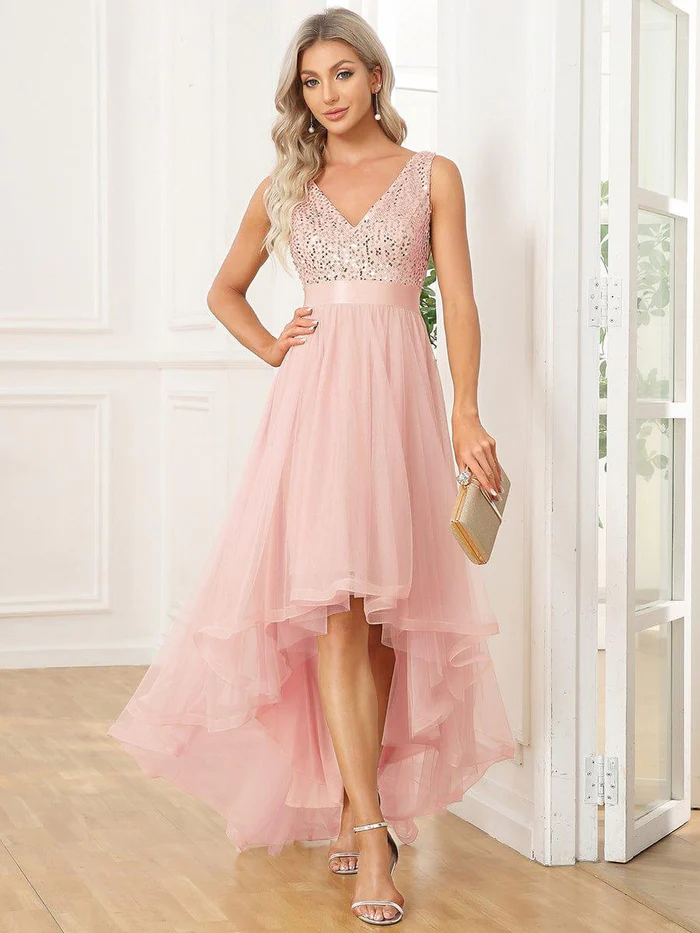
Scattered or graduated designs — heavier at the neckline or hem, sparser through the middle — tend to be more wearable. They weigh less, sit better, and read as considered rather than costume under normal lighting rather than a camera flash.
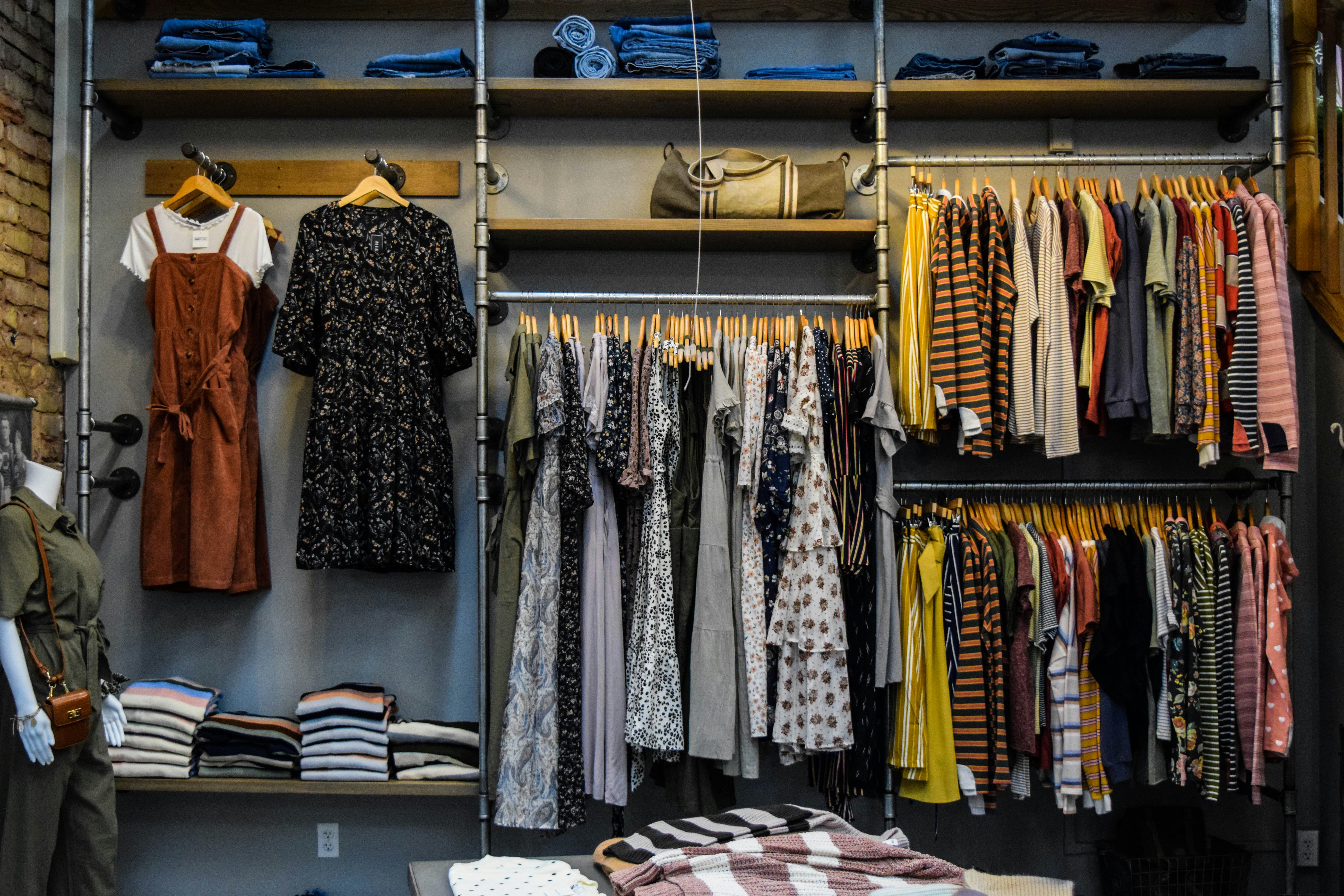
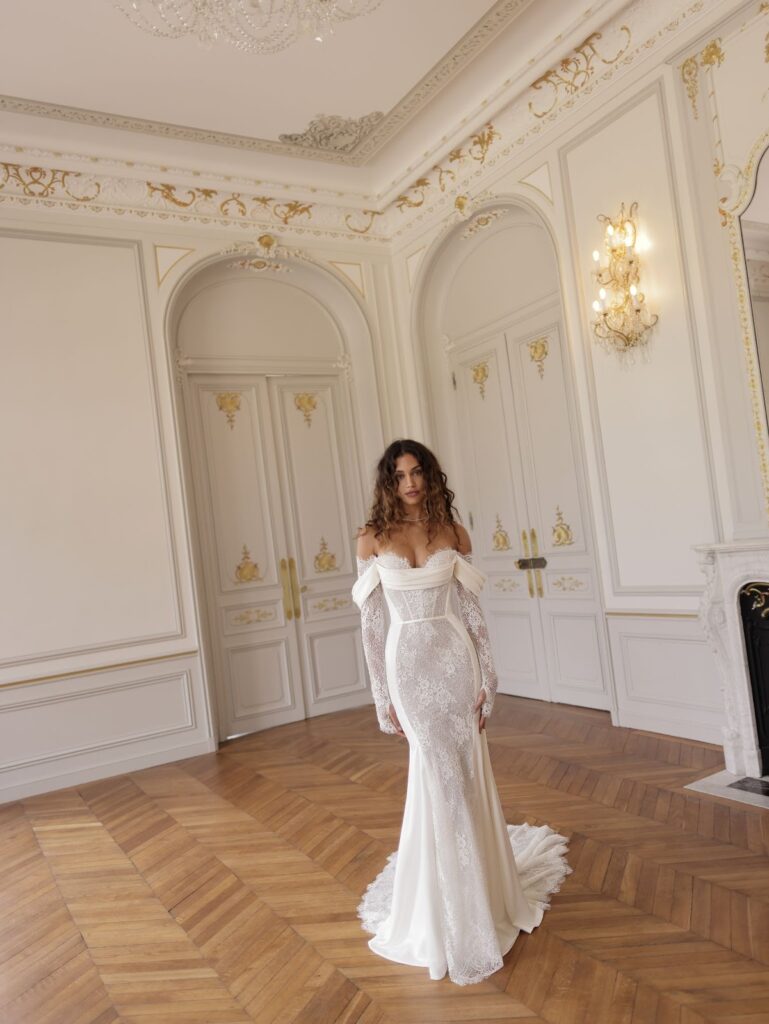
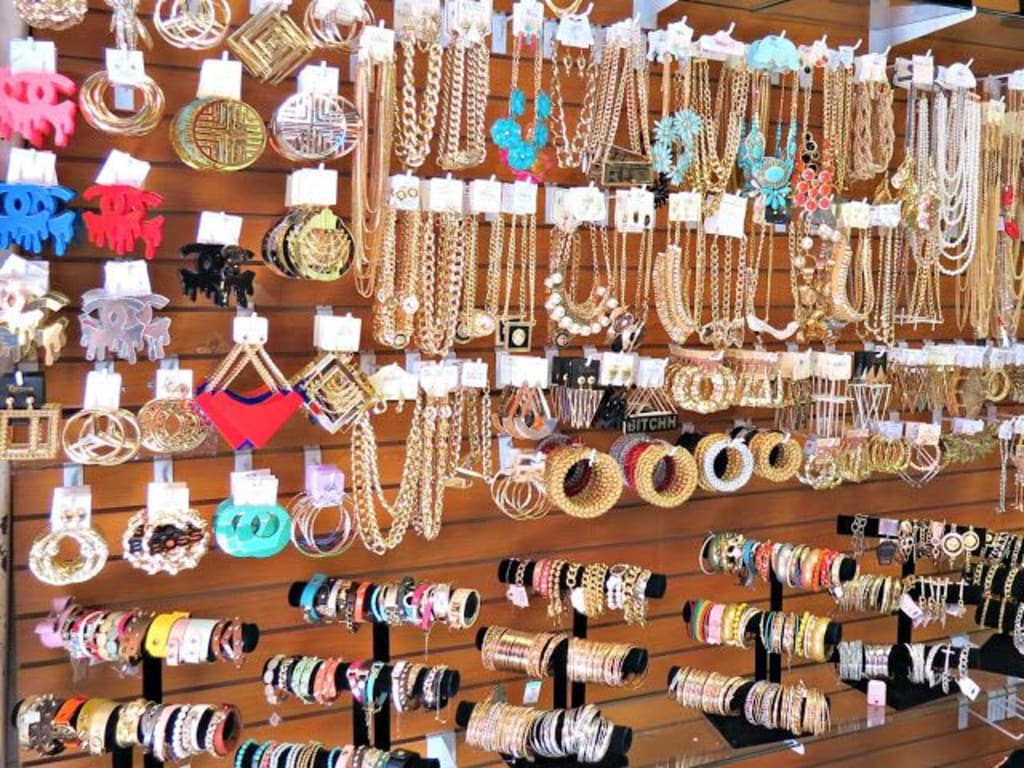
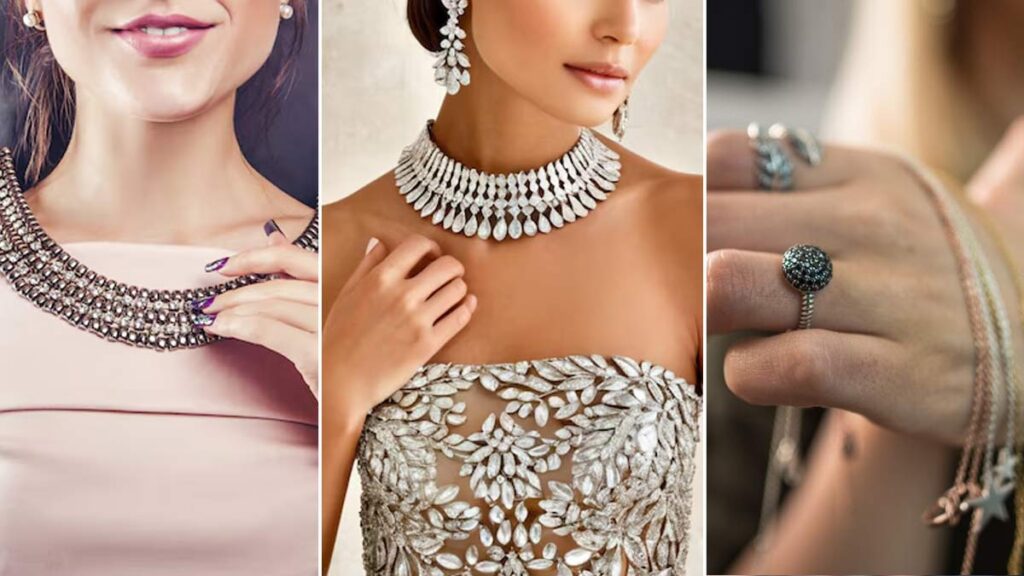
Looking across the shop the full range here, the split is fairly clear: the fully embellished pieces sit at one end and the trimmed and scattered designs at the other, and the second group covers far more occasions than the first.
Neither is better. But if you are buying one embellished dress rather than several, the scattered version will get worn more times.
Colour Changes the Register Completely
Black with clear stones is the safest version and the most versatile. It reads as evening wear rather than event wear, which means it works at a dinner where nobody else is dressed up.
Nude and beige with matching stones is subtler still, and photographs unusually well because the stones catch light without the base fabric competing.
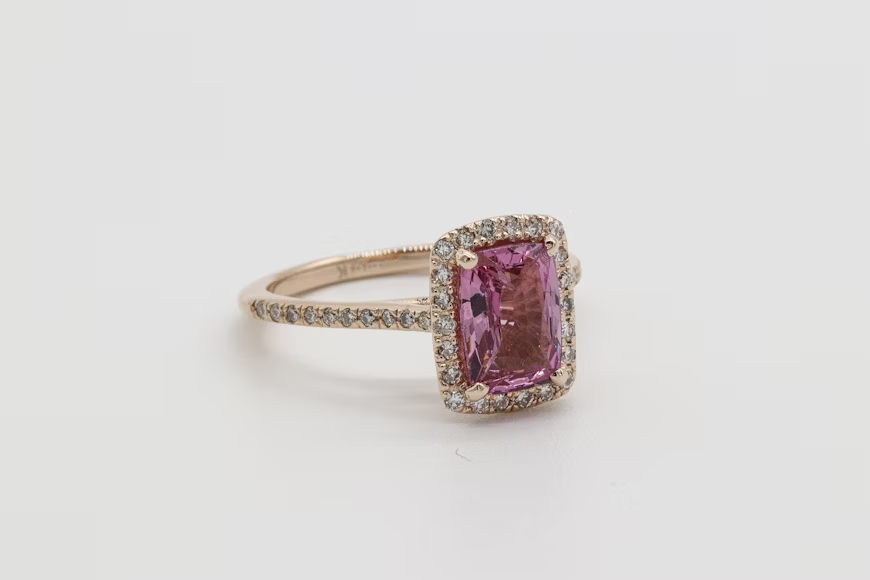
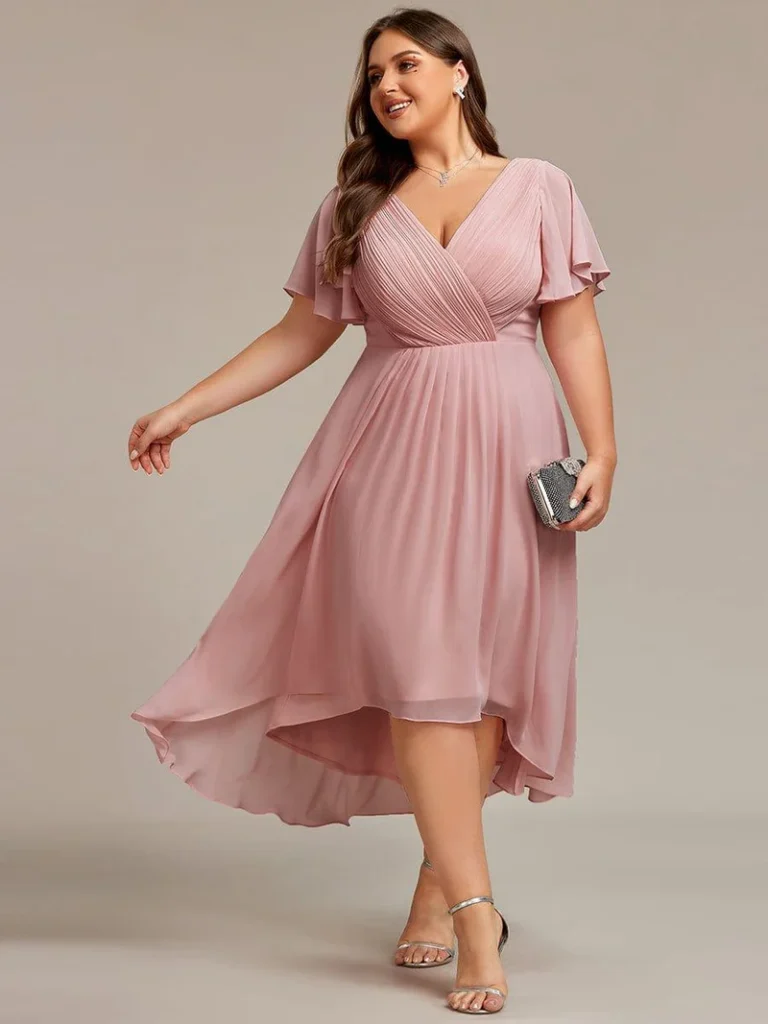
Pink, brown and jewel tones push toward occasion territory. Nothing wrong with that, provided the occasion exists.
The mistake is buying the most striking colour for a life that does not have many events in it. The black one gets worn eight times. The bright one gets worn once.
Care, Briefly
Hand wash cold or spot clean. Never a machine — the agitation is what removes stones fastest, and a dryer will destroy any adhesive setting in a single cycle.
Store flat rather than hanging if the dress is heavily embellished. Hanging puts the full weight of the stones on the shoulder seams for months at a time, and that is how necklines end up stretched.
Keep it out of contact with anything textured. Stones snag on knitwear and sequins, and a snagged setting takes several stones with it.
What It Comes Down To
Check where the stones are glued. Check whether the base fabric holds its shape. Check for a lining.
Three things, thirty seconds, and they separate a dress you wear for years from one you wear once and resent.
The category has a reputation for being disposable. Mostly that reputation was earned by badly made examples, and there are a lot of those. The well-made ones behave completely differently, and they are not always the expensive ones.