




































































































































































































































































































































































































































































































































































































































































































































































































































































































































































































































































































































































































































































































































































































































































































































































































































































































































































































































































































































































































































































How Long to Keep a Clay Mask On — Evidence-Based Guide

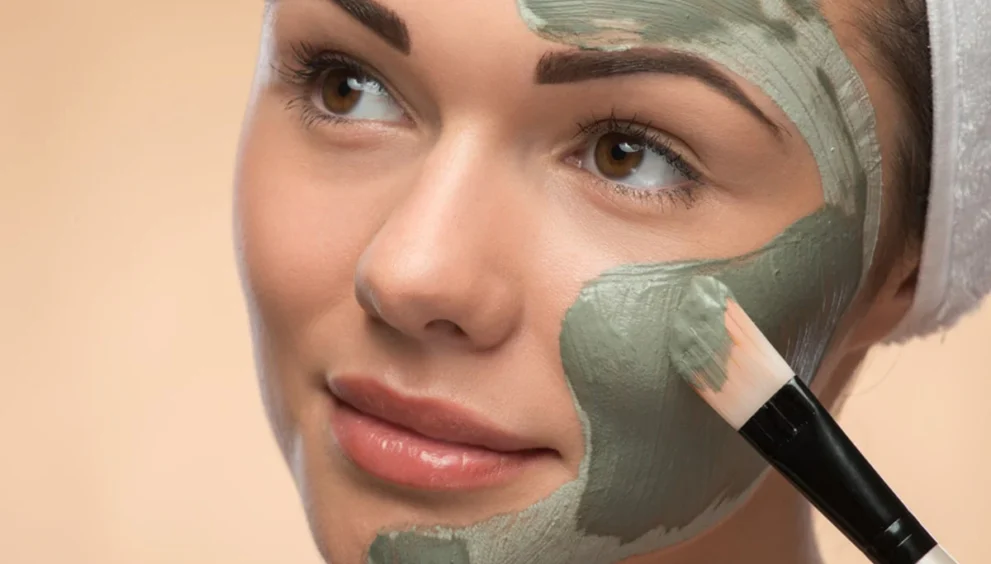
Have you ever let a clay mask dry to the point of cracking, thinking that means it’s “working”? If so, you’re not alone — but that habit might be doing more harm than good. Understanding how long to keep a clay mask on is the single most important factor in getting real results without compromising your skin barrier. In this evidence-based guide, we’ll cover exact timing recommendations by skin type and clay type, what happens when you leave it on too long, and exactly how to finish your routine for maximum benefit.
Key Takeaways
- General rule: Most clay masks should be left on for 10–15 minutes maximum.
- Do not wait for the mask to crack — cracking is a sign of over-drying, not effectiveness.
- Timing varies by skin type: Oily skin can handle up to 15 minutes; dry/sensitive skin should stick to 5–10 minutes.
- Timing also varies by clay type: Bentonite clay is more absorbent and needs less time (8–12 minutes) than gentler kaolin clay (10–15 minutes).
- Post-mask care is critical: Always follow with hydration and barrier repair to avoid irritation and rebound oil production.
Why Clay Mask Timing Matters
Clay masks work through a straightforward mechanism: as the mask dries, the clay particles absorb excess sebum, dirt, and impurities from the surface of your skin. In the first few minutes, the mask is still damp and active ingredients begin binding to surface oils. Between 5 and 15 minutes, the mask firms as it pulls impurities from pores — this is the sweet spot. Past 15 minutes, the mask has fully dried and starts drawing natural moisture out of your skin instead, which damages the barrier.
A 2023 clinical trial published in Skin Research and Technology involving 75 adults with oily or combination skin confirmed this pattern. Participants who used a kaolin and bentonite clay mask twice weekly for 4 weeks (with 10–15 minute applications) showed significant improvements in acne outcomes, sebum content, and skin evenness. Importantly, the study recorded an immediate post-treatment reduction of 3.09% in Transepidermal Water Loss (TEWL) — a sign the mask was not damaging the barrier when used correctly. Source
The takeaway is clear: timing isn’t just about convenience — it’s about respecting the physiological limits of your skin.
How Long to Keep a Clay Mask On (General Guidelines)
The most common question we hear is “how long to keep clay mask on” — and the answer is surprisingly consistent across dermatologist sources. The American Academy of Dermatology (AAD) and multiple clinical studies converge on a 10-15 minute window for most clay masks.
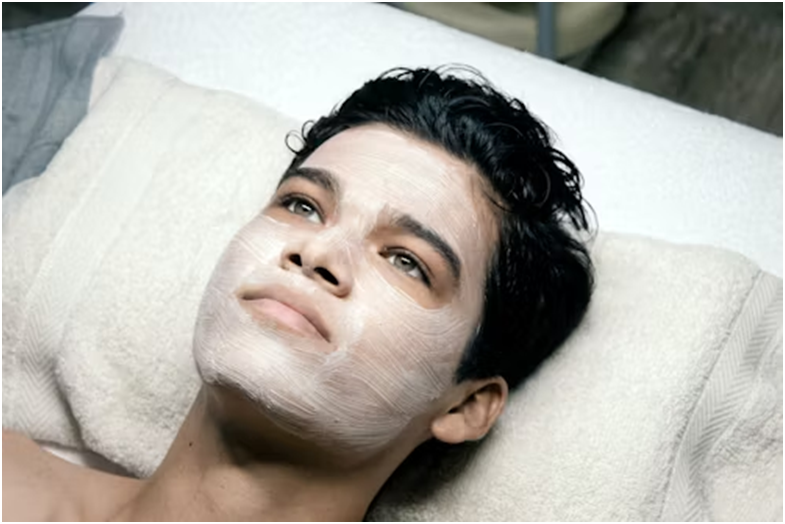
Here’s the simple rule to follow: rinse the mask off when it is mostly dry but still slightly tacky to the touch. If you see cracking lines forming across the mask, you have waited too long. Cracking means the clay has contracted enough to pull moisture from the deeper layers of your skin, which increases TEWL and compromises the barrier.
The “no-crack” rule: If your mask cracks, it’s no longer absorbing oil — it’s pulling water out of your skin.
This is also why applying a thin, even layer is so important. A thick layer takes too long to dry, which makes it harder to judge the correct timing. A thin layer dries evenly, allowing you to reliably assess when the mask is ready to rinse — typically in the 10-15 minute range.
For a deeper dive into clay face mask timing across different products, check out our dedicated guide on how long to keep clay mask on.
Clay Mask Timing by Skin Type
Not all skin is created equal, and clay mask by skin type recommendations exist for good reason. Here’s how to adjust your timing based on your unique skin needs.
Oily and Acne-Prone Skin
If you have oily or acne-prone skin, you can typically tolerate the full 15 minutes. Clay masks formulated with bentonite or kaolin are particularly beneficial here because they have high absorbency for excess sebum. Many users ask how long leave clay mask on face when they have oily skin — the answer is up to 15 minutes, but no longer.
Frequency recommendation: Up to 3 times per week.
Key point: Even with oily skin, do not wait for the mask to crack. At the first sign of cracking, rinse immediately.
Combination Skin
Combination skin requires a tailored approach. Apply the clay mask more thickly on the T-zone (forehead, nose, chin) where oil production is higher, and in a very thin layer on the cheeks and jawline where skin tends to be drier. A technique called multi-masking — using different masks on different zones — works well here.
Timing: 10–12 minutes on the T-zone. If your cheeks feel tight before that, rinse the mask off the cheeks first.
Frequency recommendation: 1–2 times per week.
Dry and Sensitive Skin
For dry or sensitive skin, the margin for error is much smaller. Leave the mask on for 5–10 minutes maximum. Stick to gentle clay types like kaolin or pink clay, which have milder absorption properties.
Frequency recommendation: Once per week, or even once every 10 days if you notice any tightness or flaking.
Critical step: Always follow with a rich, hydrating moisturizer or barrier repair treatment. Do not skip this step.
Clay Mask Timing by Clay Type
Understanding bentonite kaolin clay difference helps you choose the right mask for your skin and adjust timing accordingly.
Bentonite Clay Masks
Bentonite clay is formed from volcanic ash and has an exceptionally high capacity for absorbing oil and toxins. Its higher pH (~8.5) makes it more alkaline than skin’s natural pH (~5.5). This powerful absorbency means it works faster — and can over-dry faster too.
Timing: 8–12 minutes. Do not exceed 12 minutes with bentonite clay.
Best for: Oily, acne-prone, and congested skin.
Kaolin Clay Masks
Kaolin clay is the gentlest of the common clay types, with a pH (~4.5) that is closer to skin’s natural level. It absorbs excess oil without stripping the skin’s natural moisture barrier.
Timing: 10–15 minutes. Safe for most skin types, including sensitive and dry skin.
Best for: All skin types, especially sensitive, dry, or combination skin.
French Green Clay Masks
French green clay is rich in minerals like magnesium and silica. It has moderate absorbency and provides a gentle detoxifying effect.
Timing: 10–12 minutes.
Best for: Combination to oily skin.
What Happens When You Leave a Clay Mask On Too Long
Leaving a clay mask on for too long triggers a cascade of negative effects that can undo the benefits of the treatment. Here’s exactly what happens at the physiological level:
- Skin barrier damage: As the mask over-dries, it reverses the direction of absorption and begins pulling water from the stratum corneum. This increases Transepidermal Water Loss (TEWL), weakening the skin barrier.
- Redness, tightness, and flaking: The physical contraction of the dried clay can cause micro-tears in the skin surface, leading to visible irritation.
- Rebound oil production: When the barrier is compromised, the skin tries to compensate by producing more sebum. This can lead to increased oiliness and worsening of breakouts within 24–48 hours.
- Increased sensitivity: Over-dried skin becomes more reactive to other products in your routine, including moisturizers and serums.
A 2023 clinical trial found that when clay masks were used correctly (twice weekly, 10–15 minutes), TEWL actually decreased by 3.09% — meaning the barrier was strengthened. But when overused or left on too long, the opposite effect occurs. Source
The Right Way to Apply and Remove a Clay Mask
Getting the most out of a clay mask involves more than just timing. Here’s a step-by-step protocol.
Step-by-Step Application
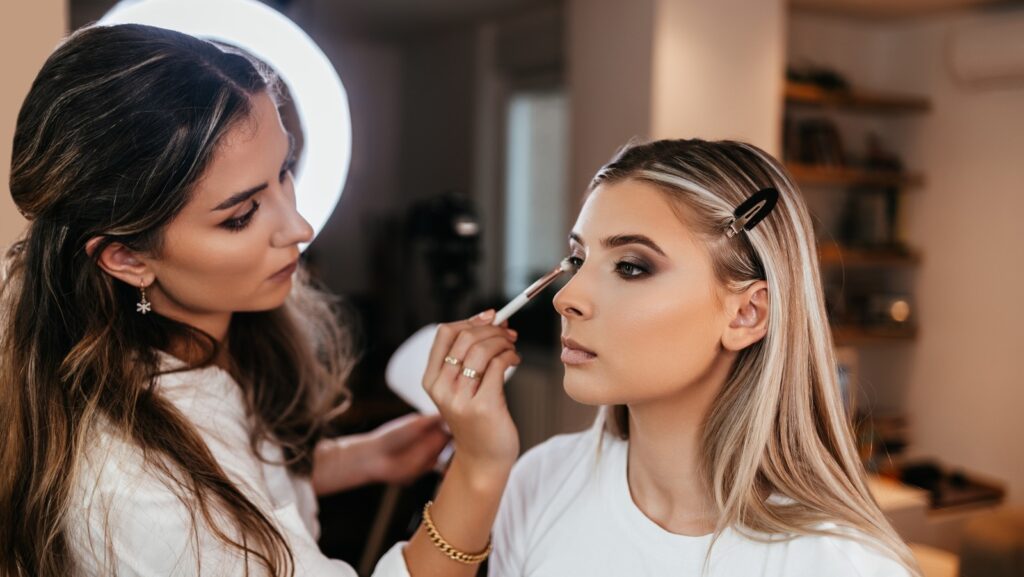
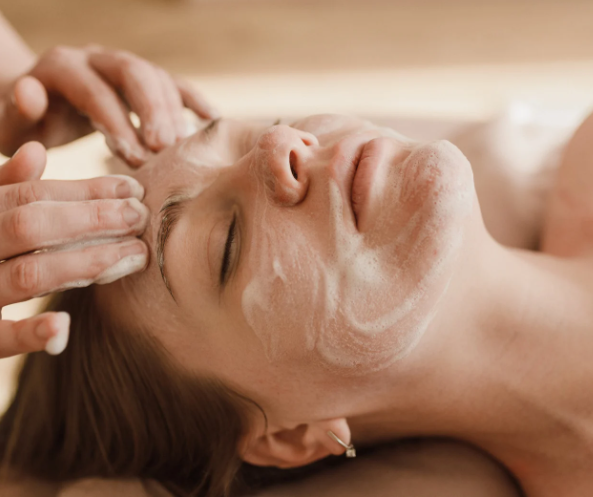
- Cleanse your skin thoroughly before applying the mask. Any residual makeup, sunscreen, or dirt will block the clay from contacting your skin.
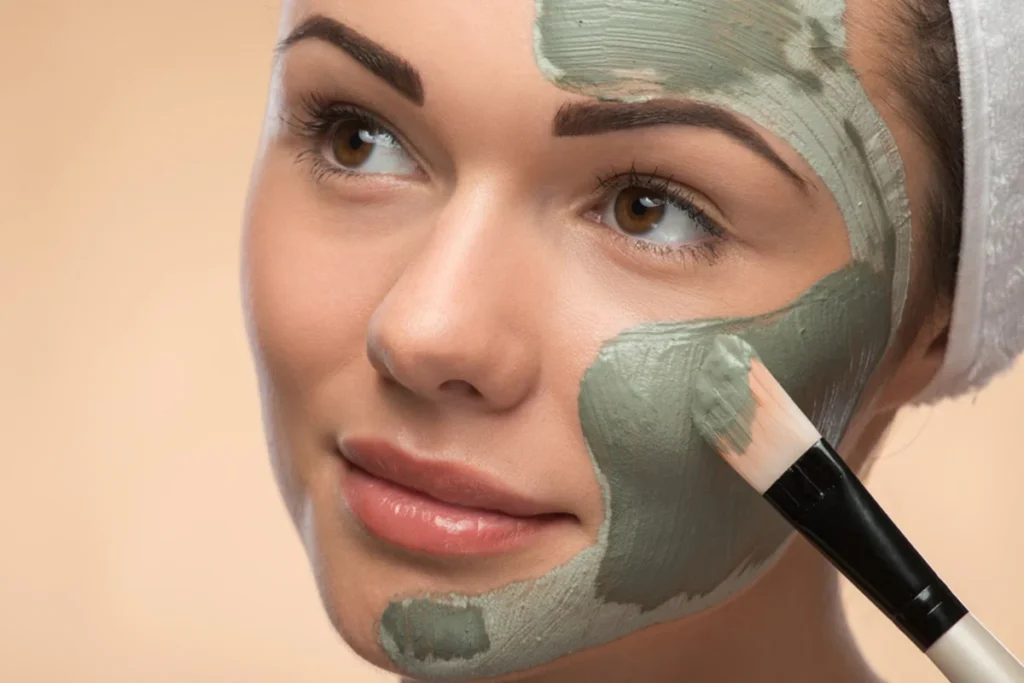
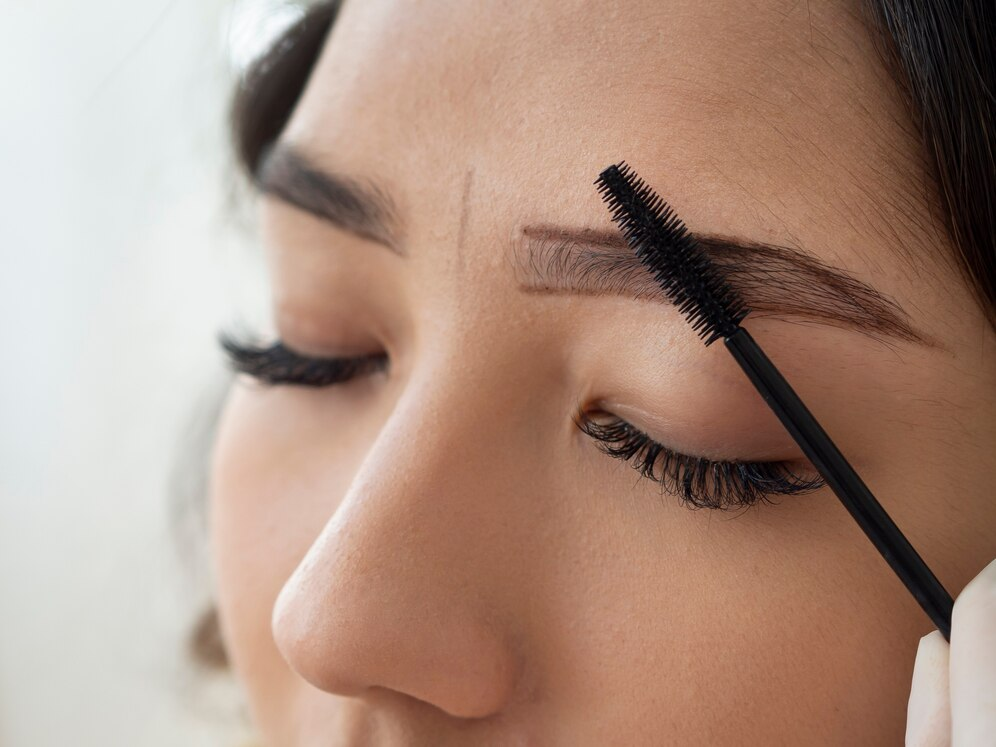
- Apply a thin, even layer using a mask brush or clean fingers. A thick layer dries unevenly and makes timing harder to judge.
- Set a timer based on your skin type and clay type (5–15 minutes). Do not rely on memory.
- Watch for signs: The mask is ready to rinse when it is mostly dry but still slightly tacky. If you see cracking lines, rinse immediately.
Proper Removal
- Use lukewarm water and a soft, damp washcloth.
- Massage in gentle circular motions — do not scrub or pull at the skin.
- Pat dry with a clean towel. Do not rub.
Immediate Aftercare
- Apply a hydrating serum or toner to replenish moisture.
- Lock everything in with a moisturizer suited to your skin type.
Post-Clay Mask Recovery — Why Barrier Repair Matters
After a clay mask treatment, your skin has been thoroughly cleansed of impurities — but it has also temporarily lost some of its natural moisture and lipid barrier. This is where post clay mask care becomes absolutely essential.
Think of a clay mask as the “cleanse” phase and barrier repair as the “replenish” phase. You cannot skip the second step without consequences. The skin needs:
- Deep hydration to replenish water lost during the drying process
- Lipids and ceramides to restore the barrier structure
- Soothing ingredients to calm any residual inflammation
This is where a PDRN face mask like the Douce Aura Overnight Mask by Pier Augé comes into play. If you are new to this ingredient, our guide on what is a PDRN mask explains how it works at the cellular level. The Douce Aura formula uses High-purity PDRN — a molecule with 98% similarity to human DNA — to repair the barrier while you sleep. Its lightweight cream-to-veil texture absorbs into a transparent finish, making it pillow-safe after about 30 minutes.
Clinical testing on 33 women showed that after just one use, 92% of users reported more hydrated skin. After 14 days, the results were even more impressive:
- Wrinkle reduction: -20.69%
- Plumping effect: +14.82%
- Firmer texture: +4.50%
Shop the Douce Aura Overnight Mask
Using a PDRN-based overnight mask after your clay mask treatment creates a complete cycle of “deep clean + deep repair” that supports long-term skin health.
Clay Mask Frequency Recommendations
Knowing how often to use a clay mask is just as important as knowing the right timing for clay face mask timing.
| Skin Type | Frequency | Recommended Time Per Session |
|---|---|---|
| Oily / Acne-prone | 2–3 times per week | 10–15 minutes |
| Combination | 1–2 times per week | 10–12 minutes |
| Dry / Sensitive | Once per week or every 10 days | 5–10 minutes |
Signs of over-masking include persistent tightness, flaking, redness, stinging when applying moisturizer, and increased breakouts. If you experience any of these, reduce frequency and shorten your application time.
Frequently Asked Questions
Can I leave a clay mask on overnight?
No. Clay masks are not designed for overnight use. Unlike overnight sleeping masks, which are formulated to stay on the skin for 7–10 hours, clay masks dry and contract. Leaving one on overnight can severely dehydrate the skin and cause barrier damage, redness, and irritation.
How do I know when my clay mask is ready to rinse?
The mask is ready when it is mostly dry but still slightly tacky to the touch — think of the texture of a dry sponge rather than a cracked desert floor. If it develops visible cracking lines or feels like a tight shell, you have left it on too long.
Should I moisturize after a clay mask?
Absolutely. Clay masks draw out impurities but also remove some of the skin’s natural oils. Applying a moisturizer or barrier repair treatment after rinsing is essential to restore hydration and protect the skin barrier.
Can I use a clay mask every day?
No. Daily use can strip the skin barrier, leading to increased TEWL, irritation, and rebound oil production. Stick to 1–3 times per week depending on your skin type.
Does a clay mask work if I only leave it on for 5 minutes?
Yes, especially if you have sensitive or dry skin and are using a gentle clay like kaolin. The absorption process begins immediately upon application, so even a short session can remove surface oils and impurities without causing irritation.
What is the best clay mask for sensitive skin?
Kaolin clay (white clay) and pink clay are the gentlest options. They have a lower pH and absorb excess oil without stripping the barrier. Avoid bentonite clay if you have sensitive or dry skin — its high absorbency can be too intense.
How long after a clay mask can I apply makeup?
It is best to wait at least 15–20 minutes after rinsing and moisturizing before applying makeup. This gives your skin time to rebalance and allows any moisturizer or serum to fully absorb, preventing pilling or uneven application.
Can I use a clay mask if I have rosacea?
Proceed with caution. If you have rosacea, choose a very gentle clay like kaolin and limit use to once per week. Leave the mask on for a maximum of 5 minutes. If you experience any stinging, redness, or flushing, discontinue use and consult a dermatologist.