














































































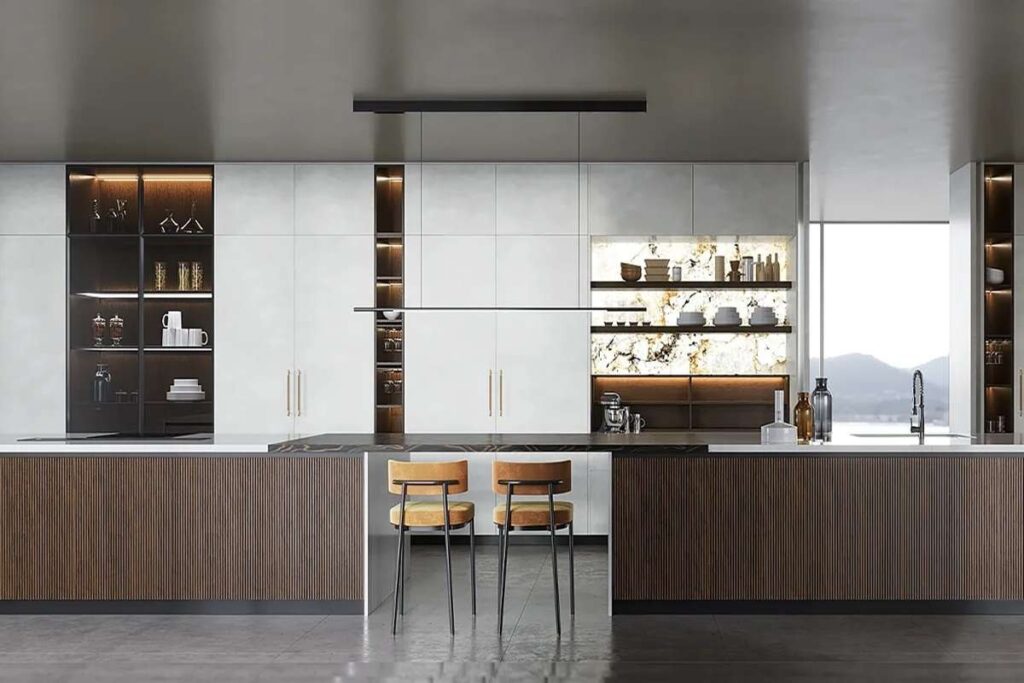





























































































































































































































































































































































































































































































































































































































































































































































































































































































































































































































































































































































































































































































































































































































































































































































































































































































































































































What Is Considered a Luxury Kitchen?

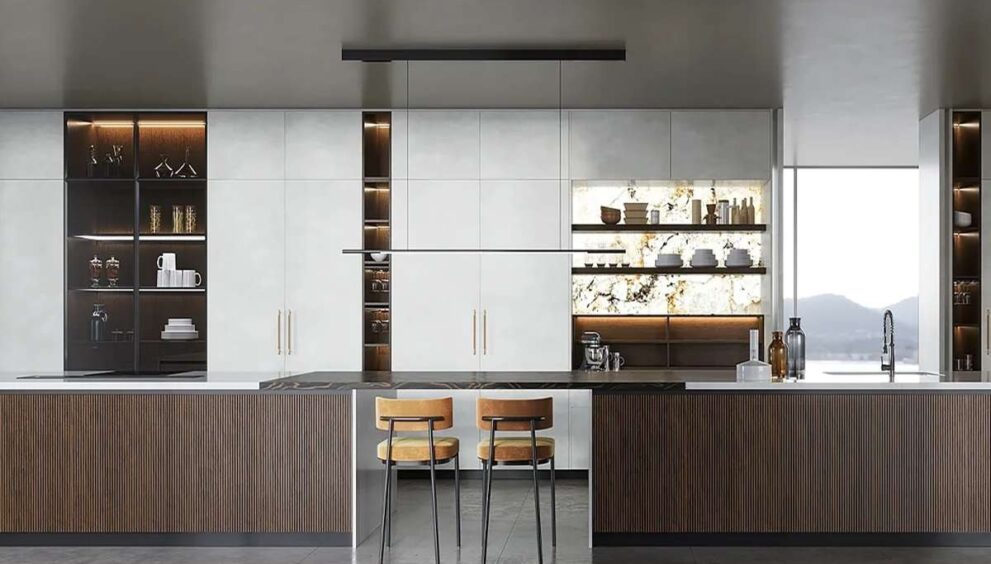
The Old Definition Is Fading — Here’s What Matters Now
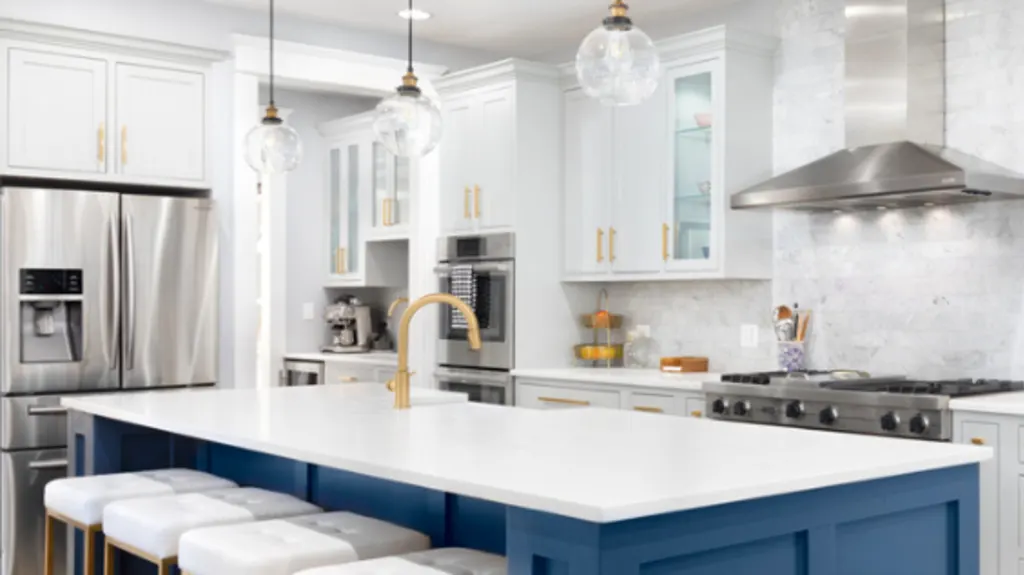
Walk into any kitchen showroom ten years ago, and you would have been shown the same formula: marble worktops, statement islands, sculptural taps, and banked appliances. Visual drama was the measure of luxury. A kitchen looked expensive, therefore it was.
Today, that equation has changed. Homeowners, architects and developers are working with a more exacting and better-informed set of expectations. They are not simply looking for beautiful surfaces; they want evidence that those surfaces will endure, that appliances will perform at the highest standards for years, and that the materials chosen today will not quietly deteriorate or incur unexpected costs in the future. As one industry expert put it, “The new luxury doesn’t shout — it soothes”.
Investment in high-end kitchens continues to grow. According to the 2025 Houzz Kitchen Trends Study, the median spend on kitchen remodels reached 60,000, up from 55,000 the previous year. Homeowners in the top 10 percent of spend now invest a minimum of $180,000 — triple the median — reflecting a 20 percent increase for premium kitchen renovations since 2023. In smaller spaces where high-end renovations become more detail-intensive, the upward trend is even more pronounced. And high end kitchen cabinets alone account for nearly 40 percent of a typical kitchen remodel budget according to home services marketplace Angi, making them the single largest line item in most projects.
So what actually defines a luxury kitchen in 2025 and beyond? Not a price tag. Not a country of origin. Not even a brand name. The answer comes down to four measurable pillars: materials that last, craftsmanship you can feel, technology that serves invisibly, and third-party standards that prove performance.
This article breaks down each of those pillars — and looks at how global kitchen cabinet brands of all origins measure up against them.
Pillar One: Materials That Hold Up Under Real Life
For decades, luxury kitchens were defined by rare materials: marble from Italy, solid timber from North America, exotic wood veneers from the tropics. Those materials still matter. But the definition has matured. As industry experts now argue, a kitchen can only be called premium if it stands up to daily wear, and if the investment made at specification stage continues to hold value throughout the occupancy of the home. Total cost of ownership has entered the conversation as directly as colour palettes and design mood boards.
This shift means every element — from drawer runners to composite sinks — is scrutinised not only for aesthetic merit but for longevity, maintenance needs, and operational efficiency. High-quality kitchen cabinets are constructed to withstand heat, humidity, and daily use while maintaining visual refinement. True high-end cabinetry is not differentiated merely by price or appearance, but by material grade, structural design, manufacturing process, and the uniformity and replicability of quality standards across every unit.
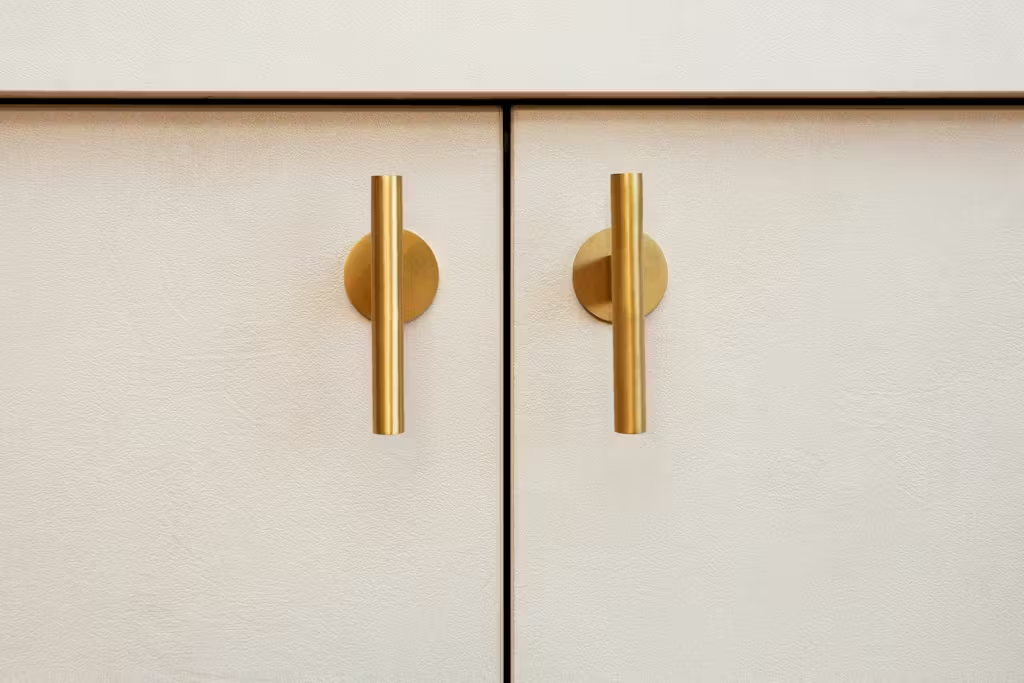
Among high end kitchen cabinets, common high-quality materials include moisture-resistant plywood or engineered core panels, natural wood veneers with precise grain matching, and advanced matte, lacquered, or textured finishes. Countertops and backsplashes continue to feature natural stone, quartz, and premium engineered surfaces — but now with a greater emphasis on resistance to scratching, staining, and thermal shock. Hardware matters too. High-end kitchens demand premium systems: soft‑close concealed hinges, full‑extension drawer runners, lift‑up mechanisms, and integrated lighting, all engineered to perform silently under full load.
Leading manufacturers rely on globally trusted hardware from brands like Blum and Hettich, both of which are regularly named among finalists at premier industry events like KBIS for their innovations in functional hardware. For kitchen cabinet brands serving international customers, these component choices signal the difference between a cabinet that looks expensive and one that actually performs like a luxury product decade after decade.
Pillar Two: Craftsmanship That Shows Up in the Details
Luxury craftsmanship is not about ornamentation. It is about elimination — of visible gaps, of uneven edges, of drawers that wobble under weight. True high-end cabinets emphasise precision manufacturing and refined construction techniques.
What does that look like in practice? Flush alignment between doors and panels, with no uneven overhangs. Seamless edge banding that feels smooth to the touch, not rough or peeling. Soft‑close systems with consistent resistance, not loose or overly stiff mechanisms. Drawer structures with high load capacity that remain stable when fully extended with heavy cookware. Countertop mitres at tight corners rather than blunt, visible joints. Cabinet interiors colour‑coordinated to match the exterior finish — a small detail that most lower‑price brands skip entirely.
These are not features that appear in a brochure. They are the kinds of things you discover only after you have lived with the kitchen for six months or a year. A luxury kitchen should reveal its quality gradually, through the absence of problems, not through a list of design claims. Customisation is also central to craftsmanship. Unlike stock or semi‑stock solutions, luxury kitchen cabinetry is tailored to fit specific needs, providing storage solutions that are both practical and aesthetically pleasing, with dimensions that fill a space precisely without filler panels.
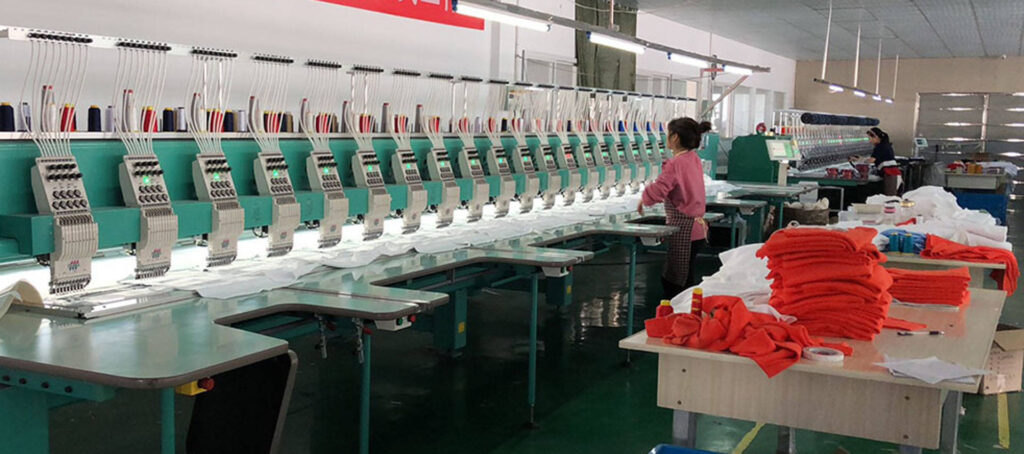
For international kitchen cabinet brands, demonstrating craftsmanship often means being transparent about their manufacturing systems. Are cabinets cut on automated CNC lines, ensuring millimetre‑accurate dimensions across every order? Are edge banding and finishing processes controlled within tight tolerances? Does the manufacturer welcome third‑party factory audits or virtual tours of their production floors?
Pillar Three: Invisible Technology That Shows the Way
One of the clearest markers of a luxury kitchen in 2025 is the deliberate concealment of functional elements to foreground pure form — what some designers call the “technical invisibility principle”.
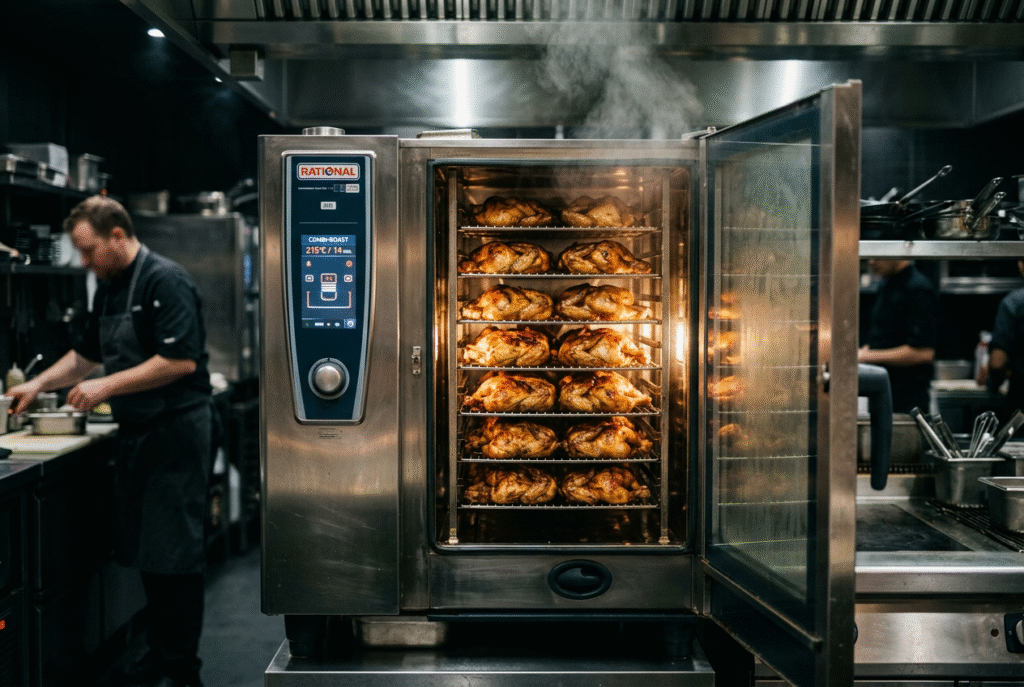
This shows up in several ways. Extraction systems integrated into ceilings or worktops, eliminating visible hoods that interrupt clean lines. Induction hobs that disappear into surfaces when not in use. Appliance garages that conceal small appliances behind elegant, flush‑fitting facades. Boiling water taps that eliminate the need for kettles sitting on countertops. Refrigerators, dishwashers, and ovens concealed behind custom panelling that matches the cabinetry rather than standing out as stainless steel boxes.
Beyond concealment, technology in a luxury kitchen serves rather than demands attention. Smart lighting that adapts to the time of day. Sensor faucets that turn on without touching a handle. Advanced smart storage systems that maximise every centimetre of interior space. Smart refrigerators with WiFi connectivity and professional‑grade ranges with precision temperature controls. The principle is consistent: the technology should be noticeable only by its absence when it is not needed, and by its effortless performance when it is.
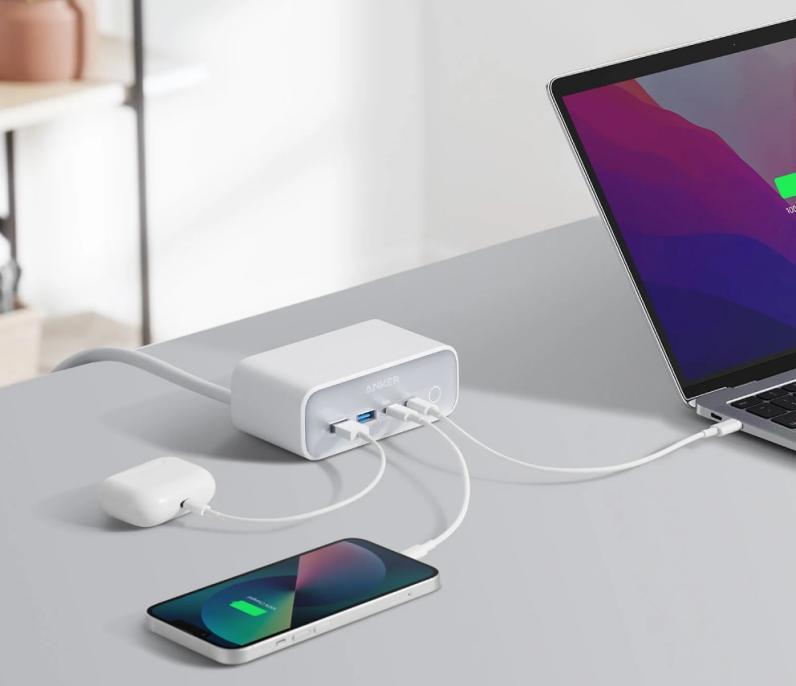
This is also where the integration of high end kitchen cabinets with smart home systems becomes critical. Cabinetry should accommodate built‑in charging stations, integrated LED lighting with discreet wiring, and pull‑out mechanisms that operate with a touch. When technology is treated as an add‑on rather than as an integrated consideration, the kitchen does not feel luxurious — it feels retrofitted.
Pillar Four: Third‑Party Standards That Prove Performance
Perhaps the most significant shift in how to identify a luxury kitchen is the rising importance of independent certification. Anyone can say their cabinets are high‑quality. Third‑party standards provide verifiable proof.
For wood‑based products, the global benchmarks include E1 and ENF standards. China‘s upgraded ENF national standard sets formaldehyde release at ≤0.025 mg/m³ — currently the world’s toughest national formaldehyde emission standard, even more stringent than CARB-NAF. For comparison, E1 (≤0.124 mg/m³) remains the widely accepted European safety benchmark. Buyers targeting the North American market should also verify CARB Phase 2 compliance, which sets strict limits on formaldehyde emissions from composite wood panels. For sustainability, FSC certification confirms that raw materials come from responsibly managed forests.
Among kitchen cabinet brands that export globally, holding these certifications is a threshold requirement, not a differentiator. The question is not whether a manufacturer has them, but how comprehensive and current those certifications are, and whether they are willing to provide documentation upon request.
Kitchen systems evaluate longevity through performance modelling and lifecycle curves. A drawer mechanism from a trusted brand like Blum is chosen not simply for the feel of a soft‑close mechanism, but for the confidence that it will still perform as intended after a decade of daily use. For developers and property managers managing luxury rental units, this matters because failure rates directly affect operational costs. A scratched worktop in year one or a replacement appliance in year three is no longer viewed as an inconvenience — it is an avoidable operational expense.
So, What Is a Luxury Kitchen?
After all of this, the definition of a luxury kitchen is surprisingly straightforward. It is not a brand origin story. It is not a price point. It is a kitchen where every material choice withstands daily use without failing, where every finish is executed with precision down to the tightest detail, where technology serves the user without demanding attention, and where independent certifications confirm that environmental and safety standards have been met — not just claimed.
Luxury kitchens in 2025 share a specific set of qualities: materials chosen for depth and tactile presence, not just appearance in a photo; appliances integrated so completely they disappear into the cabinet line; layouts organised around how the household actually cooks, not around what photographs well; and details resolved rather than left as afterthoughts.
This is the framework that applies to kitchen cabinet brands from Europe, North America, and Asia alike. What matters is not where a cabinet was made, but whether it meets these standards of material quality, craftsmanship consistency, technological integration, and third‑party validation.
For buyers evaluating high end kitchen cabinets for their next project — whether a single villa, a luxury apartment tower, or a hotel renovation — the right question is no longer “Which brand is supposed to be best?” The right question is “Does this cabinet meet the four pillars?” Because a luxury kitchen announces itself not through its label, but through how it feels every day, year after year.